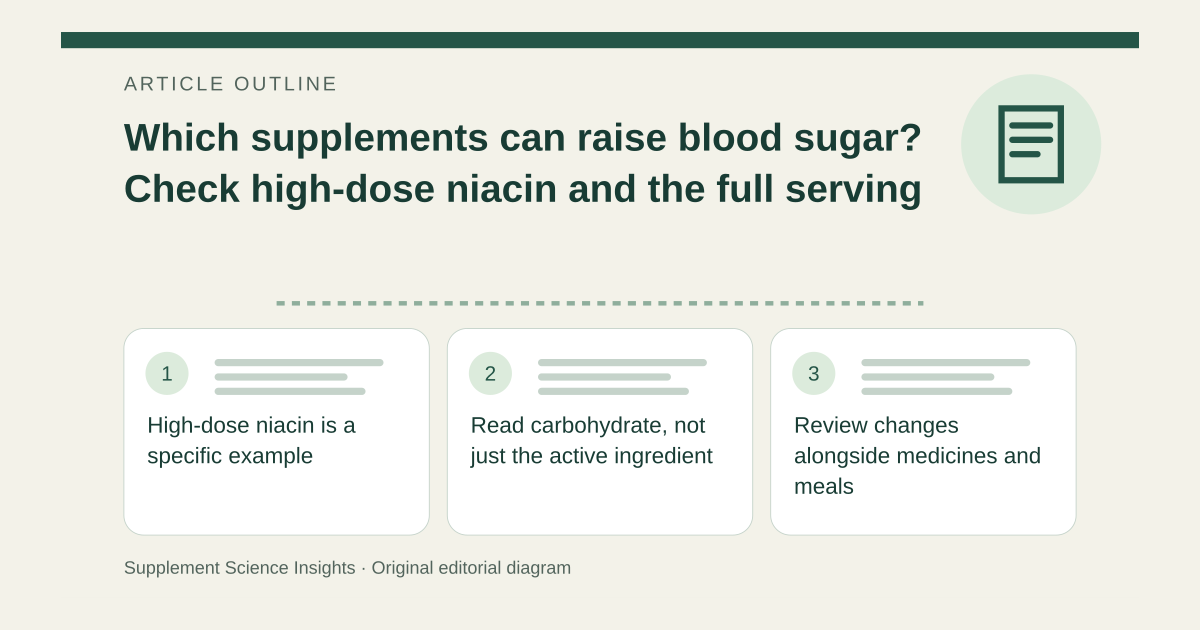
High-dose niacin is a specific example
ODS describes impaired glucose tolerance and insulin resistance among adverse effects of high-dose nicotinic acid. This is not the same exposure as normal amounts of niacin in food, and different niacin forms have different adverse-effect profiles. [1]
Read carbohydrate, not just the active ingredient
A shake, gummy or powder may contain sugar or other carbohydrate in addition to its named supplement ingredient. Compare the actual serving and any drink used to prepare it. A no-added-sugar claim does not mean the prepared serving contains no carbohydrate. [2]
Review changes alongside medicines and meals
The timing of a glucose rise alone does not establish causation. Record the product, dose, serving, meals and readings for the care team. Do not adjust diabetes medicines independently to compensate for an unreviewed supplement. [3][1]
Compare the complete change
Imagine a new protein drink is prepared with sweetened milk while high-dose niacin is also started. The label and timeline reveal two different issues to review. Calling the change a protein effect would miss both the carbohydrate exposure and the niacin dose. [2][1]
| Clue | Interpretation |
|---|---|
| High-dose nicotinic acid | Can affect glucose tolerance |
| Prepared shake or gummy serving | Count carbohydrate |
| New abnormal readings | Discuss the full timeline and treatment |
Sources for this article
- Niacin - Health Professional Fact Sheet
Source consulted: 2026-09-20. This is a reference resource, not a claim that we conducted the studies or tested a product. - How to Understand and Use the Nutrition Facts Label | FDA
Source consulted: 2026-09-20. This is a reference resource, not a claim that we conducted the studies or tested a product. - Dietary Supplements: What You Need to Know
Source consulted: 2026-09-20. This is a reference resource, not a claim that we conducted the studies or tested a product.