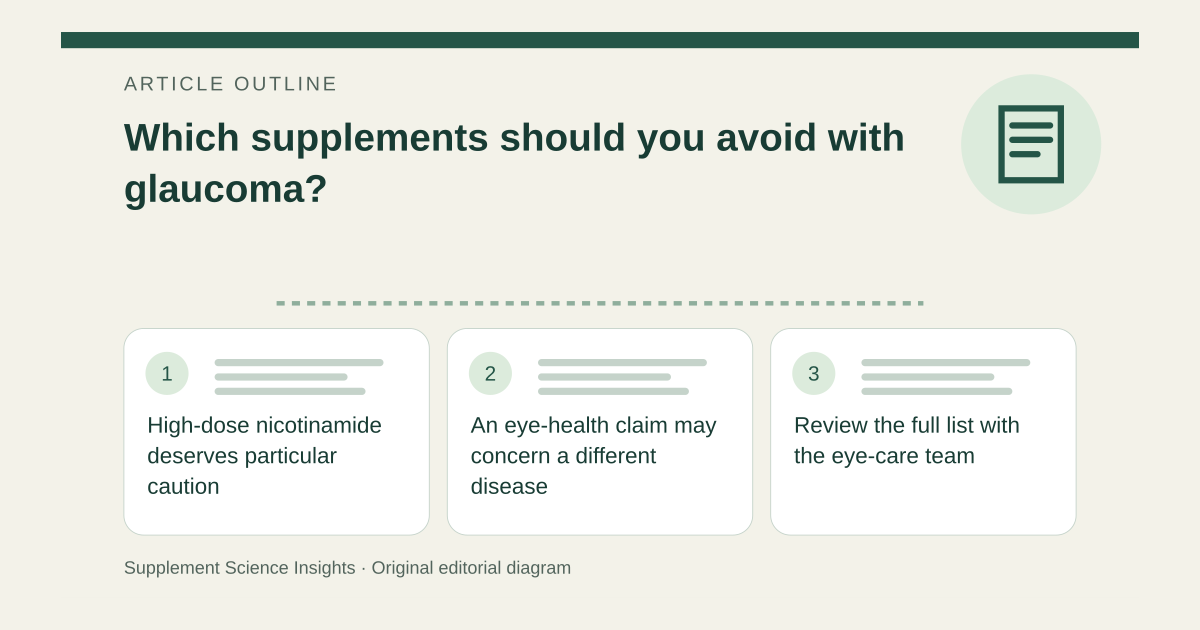
High-dose nicotinamide deserves particular caution
AAO’s EyeWiki review describes serious liver injury associated with high-dose nicotinamide studied for glaucoma. This is not a reason to avoid normal food sources of vitamin B3; it is a reason not to copy experimental gram-level regimens. Different B3 forms and ordinary multivitamin amounts are not interchangeable with a trial intervention. [1]
An eye-health claim may concern a different disease
The review finds much alternative-treatment evidence insufficient or inconsistent for glaucoma outcomes. A product promoted for general vision cannot be assumed to preserve the optic nerve or replace prescribed drops. Include concentrated herbs and stimulant-containing products in the review rather than considering only products labeled for eyes. [1][2]
Review the full list with the eye-care team
Imagine someone adds an eye blend and a separate high-dose vitamin. The combined exposure may be very different from either front label. Bring both labels and all medicines to the ophthalmologist or pharmacist. Continue the prescribed glaucoma plan while suitability is assessed; absence of symptoms does not demonstrate that a supplement controls the disease. [1][2]
| Question | Useful check |
|---|---|
| What is the target? | A defined symptom or clinical result |
| What is the exposure? | Full formula and medicines |
| What supports the claim? | Evidence matching the person and outcome |
Sources for this article
- Alternative Treatments for Glaucoma - EyeWiki
Source consulted: 2026-09-21. This is a reference resource, not a claim that we conducted the studies or tested a product. - Dietary Supplements: What You Need to Know - Consumer
Source consulted: 2026-09-21. This is a reference resource, not a claim that we conducted the studies or tested a product.