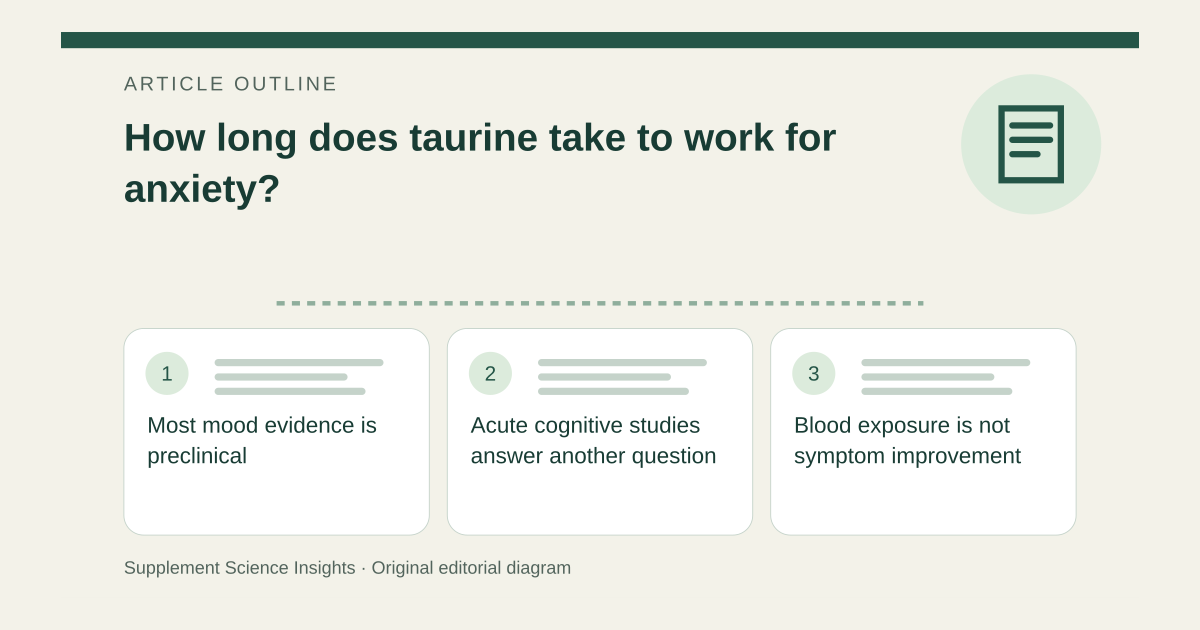
Most mood evidence is preclinical
A 2026 scoping review found taurine mood research was dominated by animal experiments. Its human taurine evidence was observational dietary research, not a trial establishing treatment of an anxiety disorder. Animal behavior tests do not predict a response time in people. [1]
Acute cognitive studies answer another question
A separate review of acute human studies found small, inconsistent mood findings, often involving caffeine, exercise or sleep deprivation. These conditions differ from treating persistent clinical anxiety with taurine alone. [2]
Blood exposure is not symptom improvement
Even if a study documents when taurine appears in blood, that does not establish when anxiety changes or how long any benefit lasts. The reviewed evidence supplies no validated schedule for increasing the dose until relief occurs. [2][1]
Use a clear care plan for persistent anxiety
Imagine an advertisement promises calm in an hour. Ask for a controlled human anxiety trial measuring that outcome and interval. Discuss ongoing symptoms and any supplement use with the treating clinician rather than replacing established care on that promise. [1][3]
| Claim | Required evidence |
|---|---|
| Absorbed quickly | Not anxiety relief |
| Animals appeared calmer | Not clinical onset |
| Energy-drink study | Not isolated treatment |
| Works in one hour | Direct human outcome trial |
Sources for this article
- Therapeutic Potential of Gotu Kola ( Centella asiatica ), Phosphatidylcholine, and Taurine in Mood Disorders: A Systematic Scoping Review.
Source consulted: 2026-09-21. This is a reference resource, not a claim that we conducted the studies or tested a product. - Cognitive Effects of Taurine and Related Sulphur-Containing Amino Acids: A Systematic Review of Human Trials and Considerations for Plant-Based Dietary Transitions - PMC
Source consulted: 2026-09-21. This is a reference resource, not a claim that we conducted the studies or tested a product. - Dietary Supplements: What You Need to Know
Source consulted: 2026-09-21. This is a reference resource, not a claim that we conducted the studies or tested a product.