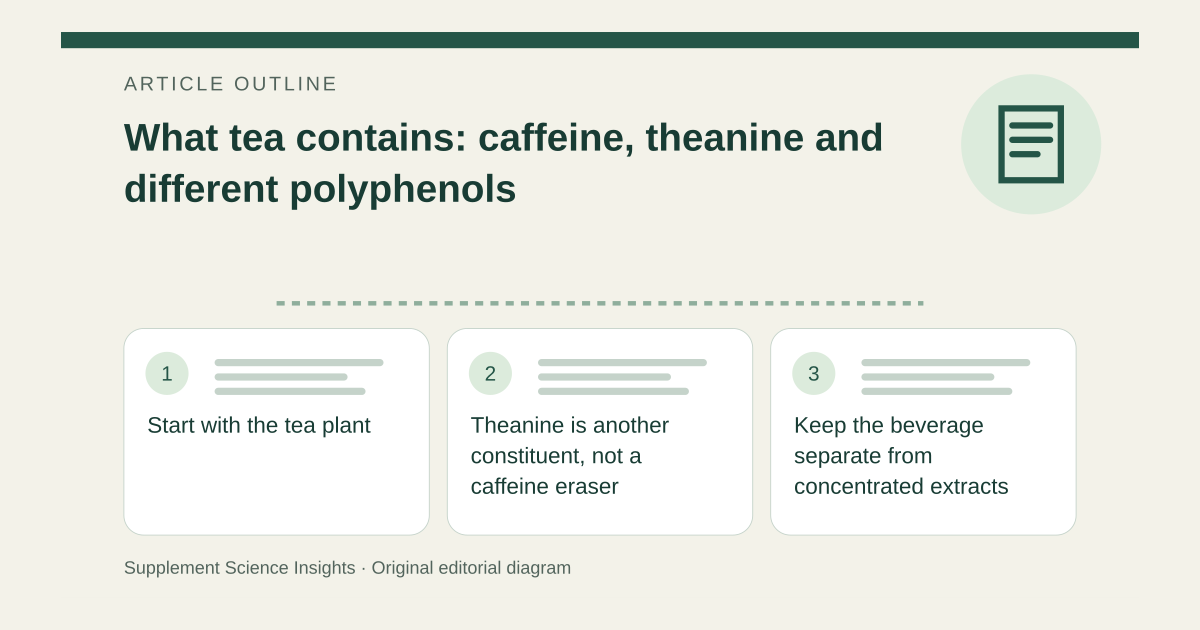
Start with the tea plant
Black, green and oolong teas come from the tea plant, while herbal infusions can use entirely different plants. Harvard’s composition guide lists caffeine and polyphenols among traditional tea constituents. It describes catechins in green tea and theaflavins associated with oxidation during black-tea processing. [1]
Theanine is another constituent, not a caffeine eraser
ChEBI identifies theanine as a glutamine-related compound isolated from green tea. Its presence does not make tea caffeine-free or establish a predictable supplement-like dose in every cup. The tea material and preparation differ, so the drink should not be equated to a capsule containing an isolated measured ingredient. [2][1]
Keep the beverage separate from concentrated extracts
Imagine a person tolerates ordinary green tea and assumes a concentrated extract must be equally suitable. NCCIH distinguishes the beverage from extract supplements, for which adverse effects including uncommon liver injury have been reported. Added milk, sugar or other ingredients also change a prepared drink’s nutrition. [3][4]
| Question | Interpretation |
|---|---|
| Tea leaves and processing | Affect the mixture of compounds |
| Theanine present | Does not remove caffeine |
| Concentrated extract | Not the same exposure as a cup |
Sources for this article
- Tea • The Nutrition Source
Source consulted: 2026-09-20. This is a reference resource, not a claim that we conducted the studies or tested a product. - N(5)-ethyl-L-glutamine (CHEBI:17394)
Source consulted: 2026-09-20. This is a reference resource, not a claim that we conducted the studies or tested a product. - Green Tea: Usefulness and Safety | NCCIH
Source consulted: 2026-09-20. This is a reference resource, not a claim that we conducted the studies or tested a product. - How to Understand and Use the Nutrition Facts Label | FDA
Source consulted: 2026-09-20. This is a reference resource, not a claim that we conducted the studies or tested a product.