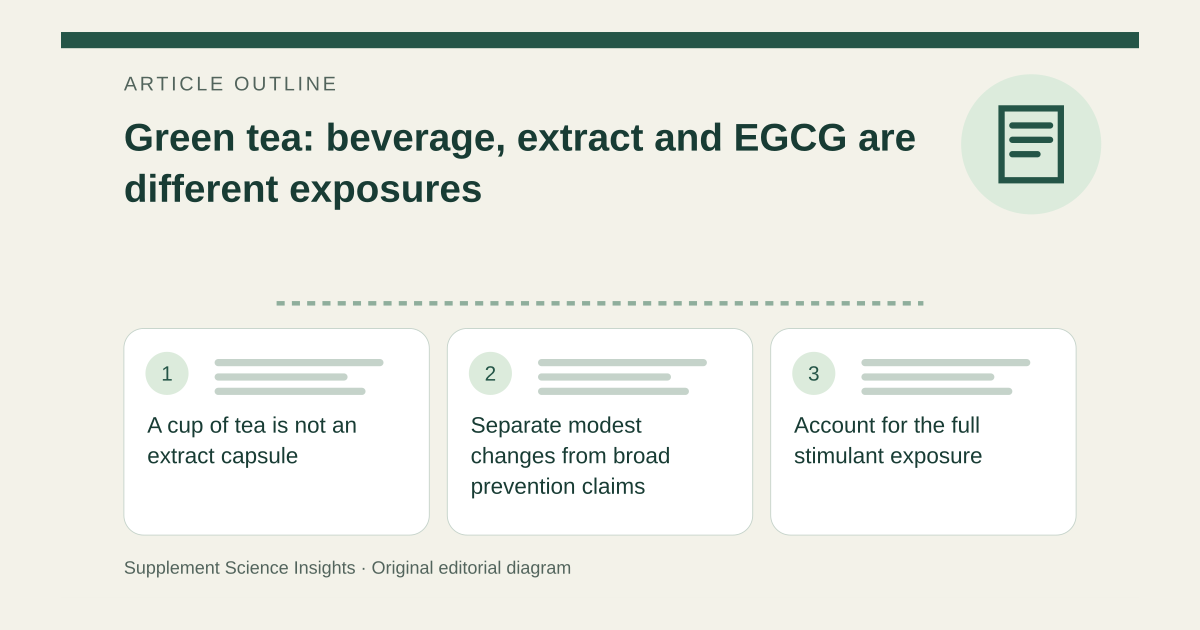
A cup of tea is not an extract capsule
Green tea comes from Camellia sinensis and contains catechins and caffeine. Supplements may concentrate selected components or combine them with other ingredients. A declared amount of total extract is not automatically an amount of EGCG or caffeine. [1]
Beverages, oral extracts and prescription topical preparations have different compositions and routes. Evidence for an approved topical medicine does not establish that an oral green-tea supplement treats the same condition. [1]
Separate modest changes from broad prevention claims
NCCIH reports small changes in total and LDL cholesterol in trials, many of which studied extracts rather than beverages. Some products may have modest weight effects, with results depending on composition and context. These findings do not establish substantial or durable weight loss for every product. [1]
Cancer findings are inconsistent. Observational associations between tea drinking and cardiovascular outcomes also cannot, by themselves, isolate tea from dietary patterns, lifestyle and other differences between groups. [1]
Account for the full stimulant exposure
Caffeine can come from coffee, tea, energy products and multi-ingredient supplements in the same day. A decaffeinated extract and a caffeinated beverage should not be assumed equivalent because both say green tea.
For a composition comparison, record total extract, any declared catechin or EGCG amount and caffeine separately. Avoid assigning an undeclared percentage. A larger catechin number is a chemical description, not a validated ranking of benefit or a guarantee of tolerability. A study of one standardized extract also cannot establish equivalence for a proprietary blend that does not disclose the amount of green tea or its individual components.
Concentrated products warrant particular attention
Green-tea extracts can cause gastrointestinal symptoms and increased blood pressure. Uncommon liver injury has been reported, mainly with tablet or capsule extracts. Ordinary beverage experience should not be used to dismiss that concern. [1]
Interactions have been demonstrated with some medicines, including nadolol, atorvastatin and raloxifene. Review the specific product with a clinician or pharmacist. Pregnancy and breastfeeding discussions should include total caffeine exposure; a supplement's botanical label does not remove caffeine from that calculation. [1]
Keep three quantities in separate columns
Imagine a fictional serving lists 400 mg green-tea extract, 50 percent EGCG and 20 mg caffeine. The declared EGCG quantity is 200 mg, while caffeine remains 20 mg. Adding those values and calling the total an effective dose would have no clinical basis.
If another product lists only 400 mg extract, its EGCG and caffeine amounts remain unknown. Matching total mass does not establish matching composition.
| Fictional declaration | Calculated or declared amount |
|---|---|
| 400 mg extract; 50% EGCG | 200 mg EGCG |
| Caffeine separately declared | 20 mg |
| 400 mg extract only | Component amounts unresolved |
Match the question to the preparation
Enjoying tea as a beverage is different from evaluating a concentrated supplement. This reference does not recommend extract use for weight loss, cancer prevention or cholesterol treatment. Composition, medication interactions and liver concerns belong beside any proposed benefit.
Sources for this article
- NCCIH — Green tea: Usefulness and Safety
Source consulted: 2026-09-17. This is a reference resource, not a claim that we conducted the studies or tested a product.