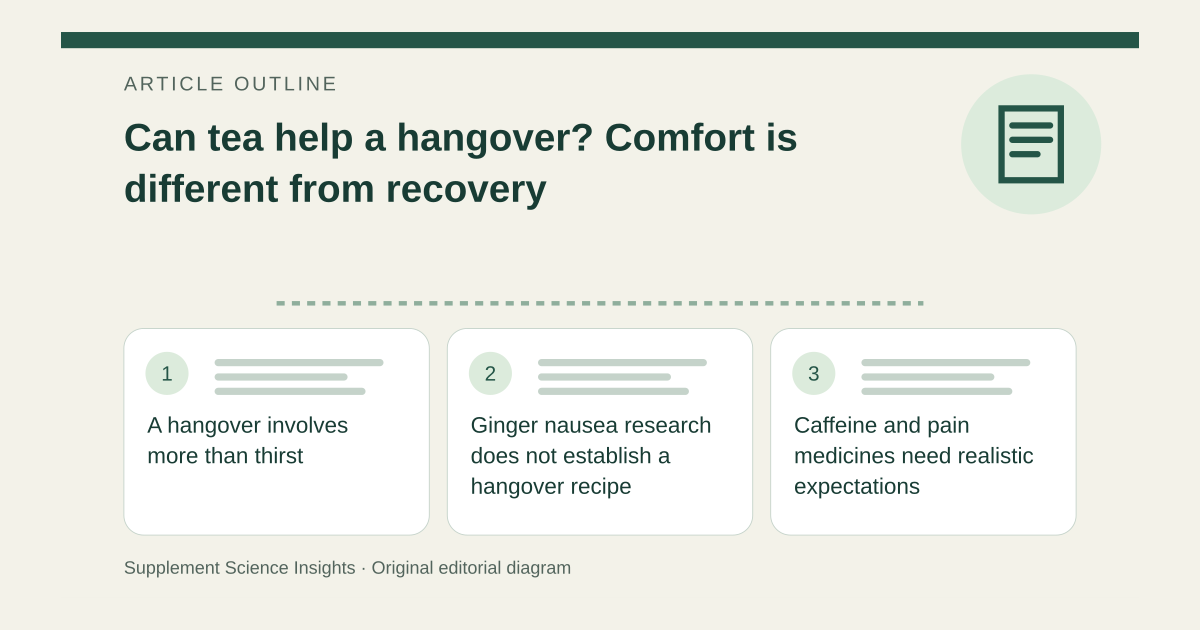
A hangover involves more than thirst
NIAAA describes disrupted sleep, gastrointestinal irritation and other effects alongside fluid loss. No remedy has been scientifically proven to cure a hangover. A cup of tea does not reverse all of these processes, and adding more alcohol can prolong the problem. [1]
Ginger nausea research does not establish a hangover recipe
Ginger has been studied for some nausea settings, but those findings do not prove that a homemade tea treats alcohol-related symptoms or accelerates clearance. Ginger can also cause heartburn or abdominal discomfort. Use tolerance to guide an ordinary drink choice rather than treating a stronger brew as a stronger antidote. [2]
Caffeine and pain medicines need realistic expectations
Coffee does not speed recovery, according to NIAAA; the same expectation should not be attached to caffeinated tea. NIAAA also warns that alcohol with acetaminophen can harm the liver, while aspirin or ibuprofen may irritate the stomach. Do not combine products casually to try to erase the after-effects. [1]
Judge function rather than the warm-drink effect
Imagine someone feels more awake after tea but remains dizzy and poorly coordinated. That is not evidence of recovery. Avoid driving or other safety-sensitive tasks while impaired and allow time for the effects to resolve. [1]
| Observation | What it does not establish |
|---|---|
| Warm drink feels soothing | Hangover cured |
| Caffeine feels alerting | Safe driving or full coordination |
Sources for this article
- Hangovers | National Institute on Alcohol Abuse and Alcoholism (NIAAA)
Source consulted: 2026-09-20. This is a reference resource, not a claim that we conducted the studies or tested a product. - Ginger: Usefulness and Safety | NCCIH
Source consulted: 2026-09-20. This is a reference resource, not a claim that we conducted the studies or tested a product.