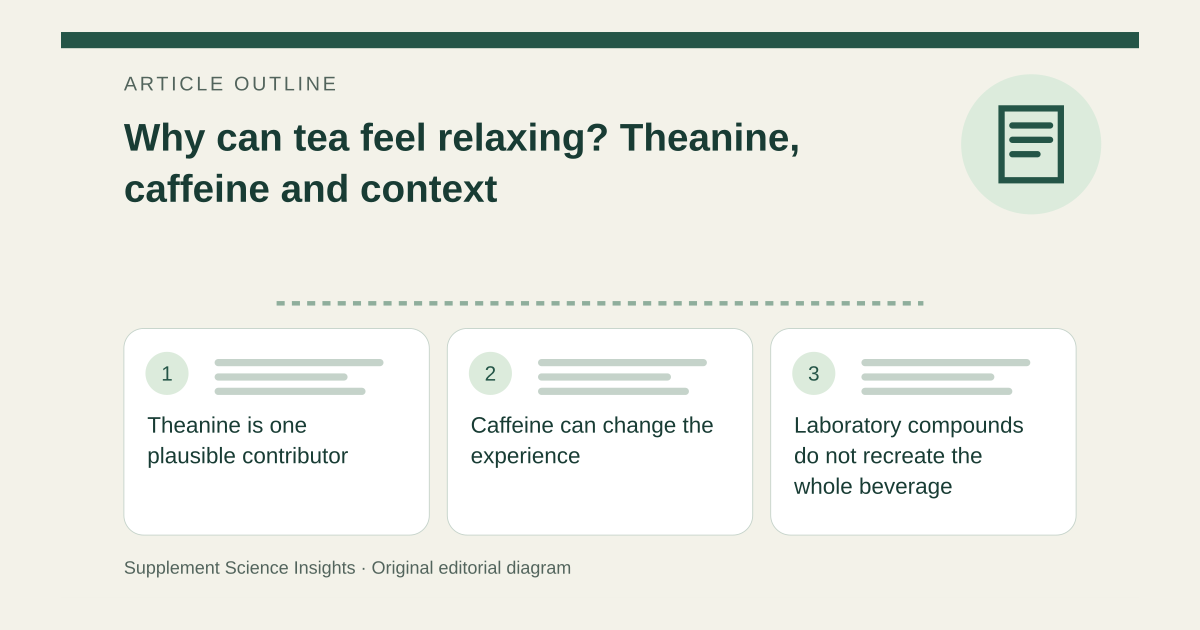
Theanine is one plausible contributor
Human reviews describe some acute attention and stress findings and changes in alpha-wave activity associated with relaxed alertness. These measurements are not proof of sedation, treatment of anxiety or a guaranteed subjective feeling after a cup of tea. [1][2]
Caffeine can change the experience
Tea also supplies caffeine, with variable amounts depending on product and preparation. Sensitivity differs between people. A beverage can feel pleasant while still affecting later sleep, and theanine does not establish immunity to caffeine-related symptoms. [3][4]
Laboratory compounds do not recreate the whole beverage
A systematic review found heterogeneous studies of tea, theanine and theanine-plus-caffeine. Small samples and frequent industry funding warrant attention. Effects from a specified combination cannot be transferred automatically to any brewed cup. [4]
Use the experience without overinterpreting it
Imagine an evening tea ritual feels calming but sleep worsens. Consider the caffeine exposure and choose a routine that fits the sleep goal. Enjoying the ritual does not demonstrate a neurotransmitter deficiency or a need for concentrated theanine. [3][1]
| Factor | Possible distinction |
|---|---|
| Theanine research | Selected measured outcomes |
| Caffeine | Alertness and sleep effects |
| Warm-drink routine | Context, not a chemical diagnosis |
| Pleasant feeling | Not proof of treatment efficacy |
Sources for this article
- Frontiers | Effects of L-theanine on cognition, mood and sleep: evidence from human trials
Source consulted: 2026-09-21. This is a reference resource, not a claim that we conducted the studies or tested a product. - Cognitive and affective effects of L-Theanine: a systematic review and meta-analysis of 31 randomized trials.
Source consulted: 2026-09-21. This is a reference resource, not a claim that we conducted the studies or tested a product. - Spilling the Beans: How Much Caffeine is Too Much? | FDA
Source consulted: 2026-09-21. This is a reference resource, not a claim that we conducted the studies or tested a product. - Effects of Tea (Camellia sinensis) or its Bioactive Compounds l-Theanine or l-Theanine plus Caffeine on Cognition, Sleep, and Mood in Healthy Participants: A Systematic Review and Meta-Analysis of Randomized Controlled Trials - PMC
Source consulted: 2026-09-21. This is a reference resource, not a claim that we conducted the studies or tested a product.