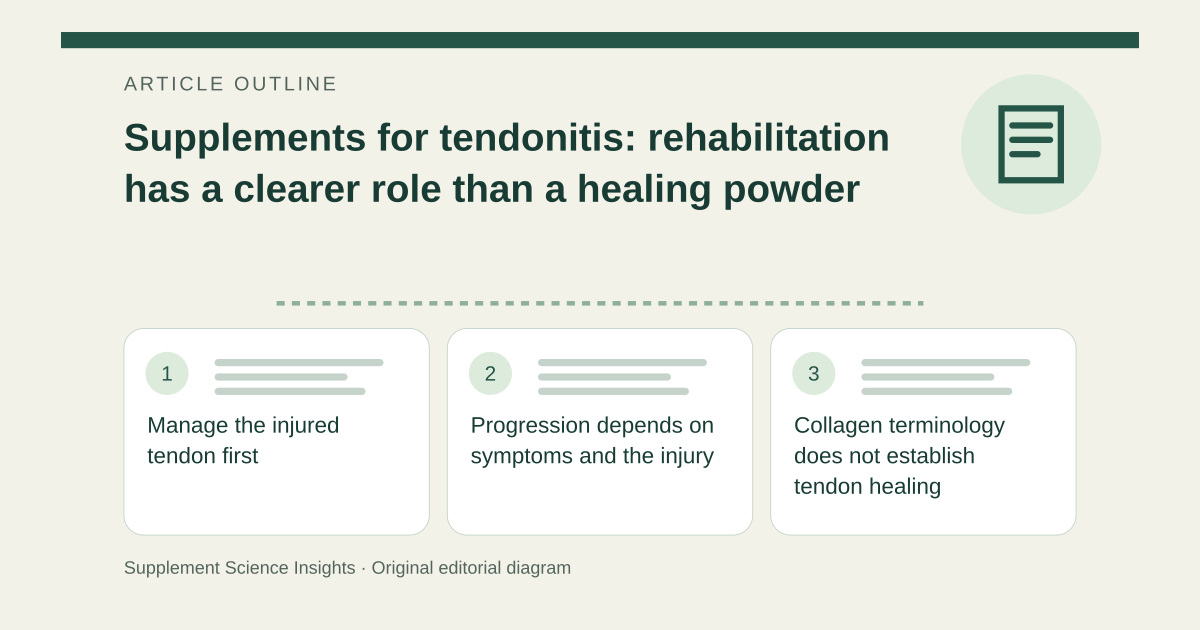
Manage the injured tendon first
NHS guidance describes a short initial period of rest and support, with ice wrapped to protect the skin when appropriate. As pain allows, movement helps avoid stiffness. This is different from keeping the area completely unused indefinitely. [1]
Progression depends on symptoms and the injury
Avoid activities that aggravate the tendon while recovering. Persistent pain, restricted movement or severe symptoms may need physiotherapy or further assessment. A clinician can distinguish tendonitis from a more significant injury. [1]
Collagen terminology does not establish tendon healing
A tendon contains collagen, but that fact alone does not show that an oral collagen product repairs it faster. Evidence would need to concern the actual injury, formulation and rehabilitation program. A tissue ingredient and a successful treatment are different claims. [2]
Do not mask a possible rupture
NHS guidance advises urgent assessment when a ruptured tendon is suspected. Sudden severe pain or loss of function should not be managed by waiting for a supplement to take effect. [1]
Evaluate recovery through function
Imagine a person starts a powder while also changing training and beginning physiotherapy. Better function is useful, but it cannot identify the powder as the cause. Follow the rehabilitation plan and review persistent limitations rather than escalating the dose. [1][2]
| Goal or finding | Meaning |
|---|---|
| Mild tendon injury | Appropriate early care and movement |
| Persistent pain or limited movement | Clinical or physiotherapy review |
| Possible rupture | Urgent assessment |
Sources for this article
- Tendonitis - NHS
Source consulted: 2026-09-20. This is a reference resource, not a claim that we conducted the studies or tested a product. - Dietary Supplements: What You Need to Know
Source consulted: 2026-09-20. This is a reference resource, not a claim that we conducted the studies or tested a product.