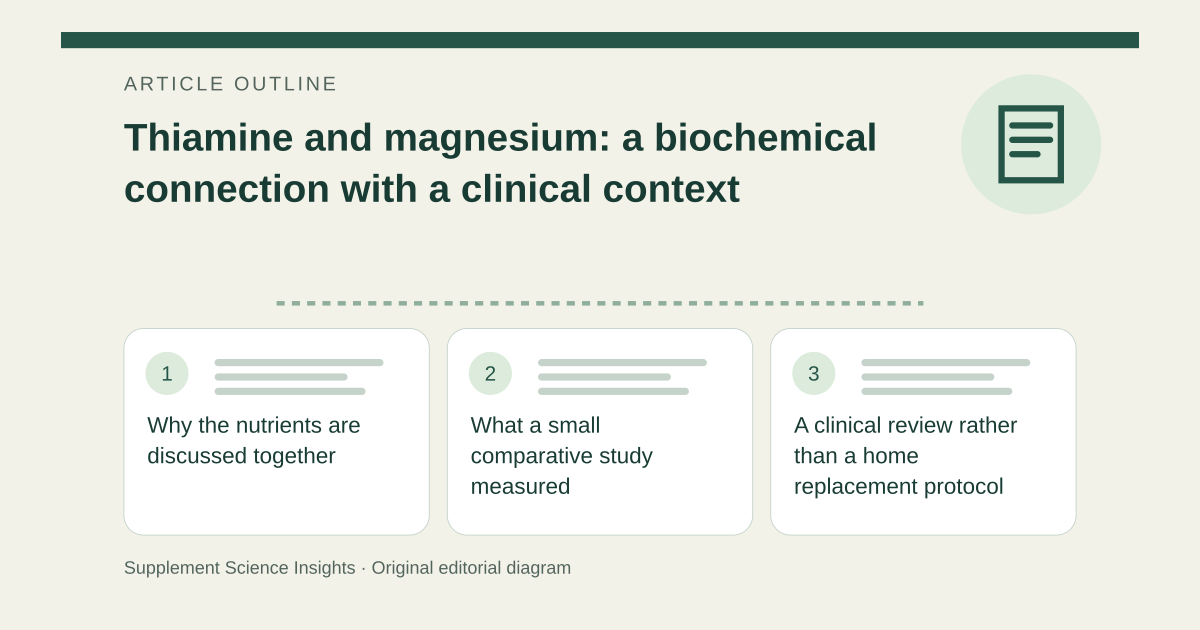
Why the nutrients are discussed together
Thiamine-dependent reactions participate in carbohydrate metabolism, and magnesium is relevant to their biological function. A person at risk of combined deficiencies may therefore need both assessed. This connection is especially relevant in clinical malnutrition and alcohol-related illness; it is not a general diagnosis from fatigue alone. [1][2]
What a small comparative study measured
A study of 36 patients with chronic alcohol-related illness presenting acutely compared intravenous Pabrinex with or without magnesium sulfate, 18 per group. The magnesium group had a larger increase in erythrocyte transketolase activity. The abstract does not establish randomization, specify the reassessment interval or provide long-term clinical outcomes. This is biomarker evidence in an acute-care population, not proof of better energy in healthy supplement users. [1]
A clinical review rather than a home replacement protocol
Imagine a patient receiving thiamine has suspected magnesium deficiency. The team can review status, kidney function and the broader illness before replacement. Do not copy an intravenous regimen into a home oral supplement plan. Funding and conflicts were not available in the retrieved abstract record, and the full paper was not appraised here. [1][2]
| Hypothetical inference | Evidence boundary |
|---|---|
| Enzyme activity improved | Biomarker outcome |
| Everyone needs both supplements | Not demonstrated by this cohort |
| Deficiency suspected during treatment | Clinical assessment of both nutrients |
Sources for this article
- The effect of magnesium administration on erythrocyte transketolase activity in alcoholic patients treated with thiamine.
Source consulted: 2026-09-20. This is a reference resource, not a claim that we conducted the studies or tested a product. - Magnesium - Health Professional Fact Sheet
Source consulted: 2026-09-20. This is a reference resource, not a claim that we conducted the studies or tested a product.