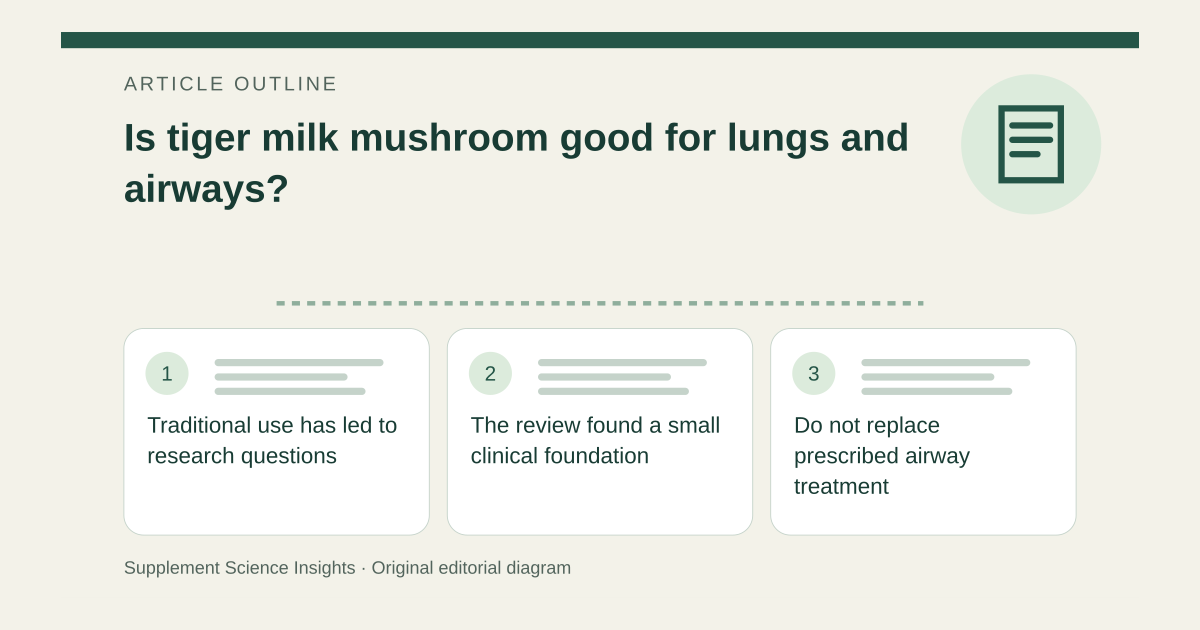
Traditional use has led to research questions
Tiger milk mushroom has been used in Southeast Asian traditions for respiratory concerns. Laboratory and animal studies investigate inflammatory pathways and airway relaxation, but those models do not establish a reliable human treatment. [1]
The review found a small clinical foundation
The 2026 review describes one human study among a largely preclinical evidence base and calls for larger, higher-quality trials. Reported changes in lung function or biomarkers need confirmation; they do not establish benefit across asthma severity, COPD or other lung diseases. [1]
Do not replace prescribed airway treatment
A proposed anti-inflammatory mechanism does not establish prevention of severe attacks or an effective rescue action. Product preparations also differ, so findings cannot be transferred automatically to every capsule or powder. [1][2]
Keep symptoms and the care plan primary
Imagine someone with asthma feels better after starting a mushroom supplement and considers stopping an inhaler. That observation cannot establish the cause or future protection. Review the change with the treating clinician and follow the established action plan for worsening breathing. [2]
| Finding | Still needed |
|---|---|
| Animal airway relaxation | Human treatment efficacy |
| Biomarker improvement | Fewer attacks and better function |
| One human study | Independent controlled confirmation |
| Natural supplement | Compatibility with prescribed care |
Sources for this article
- Effectiveness of tiger milk mushroom (Lignosus rhinocerus) on asthma: a systematic review.
Source consulted: 2026-09-21. This is a reference resource, not a claim that we conducted the studies or tested a product. - Dietary Supplements: What You Need to Know
Source consulted: 2026-09-21. This is a reference resource, not a claim that we conducted the studies or tested a product.