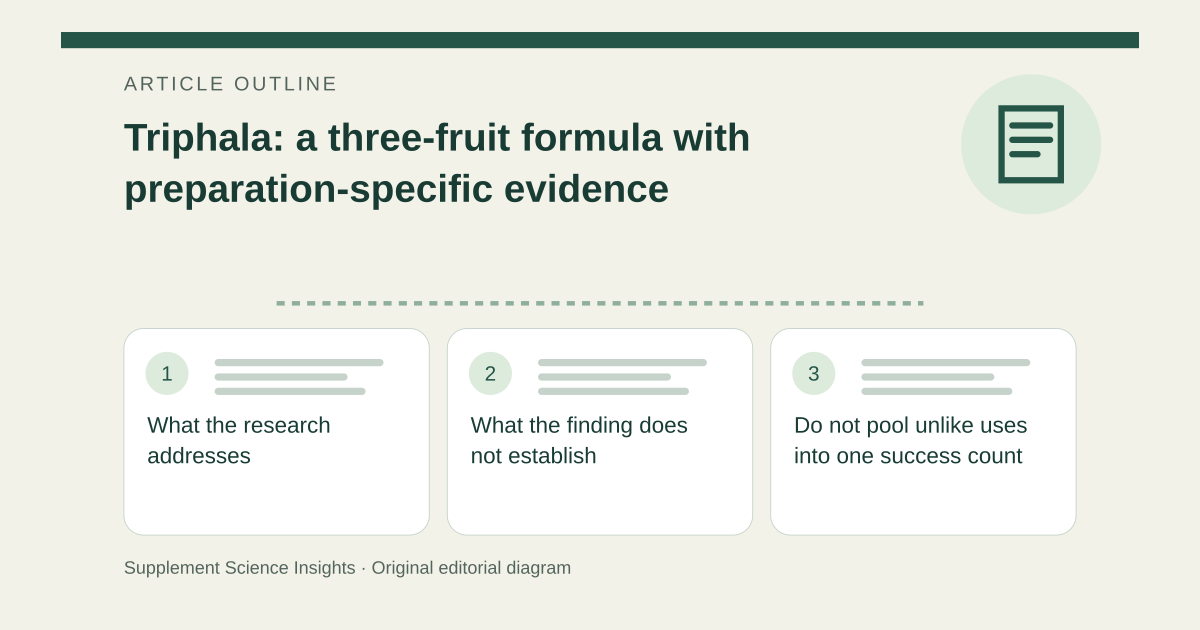
What the research addresses
Triphala is an Ayurvedic combination of three fruits, rather than a single plant ingredient. MSK describes limited human research, including oral-hygiene studies and early metabolic findings. Some results are promising, while others, including a combination with guggul, did not show benefit. [1]
What the finding does not establish
A mouthwash study does not establish the effect of a swallowed powder. Results for the full mixture also cannot be divided among its individual fruits without an appropriate comparison. [1]
Do not pool unlike uses into one success count
Imagine a review includes a mouthwash, a swallowed powder and a powder mixed with another herb. Counting each favorable result as proof that “triphala works” hides three different interventions. Keep the route and additional ingredients beside each outcome.
For a digestive goal, ask specifically about evidence for the swallowed preparation and the symptom that matters. A dental-plaque result is not irrelevant science, but it answers another question. A useful summary can recognize that result without using it to inflate confidence about bowel symptoms or weight.
| Hypothetical finding or choice | What it means |
|---|---|
| A mouthwash reduces a dental measure | A local oral-hygiene result |
| A swallowed powder is marketed | A different route and question |
| An extra herb is added | A new formula, not an unchanged intervention |
Safety and treatment considerations
Digestive adverse effects have been reported. MSK describes inhibition of drug-metabolizing enzymes, so medication compatibility requires attention rather than an assumption of safety. Limited studies cannot establish the long-term risk of every formulation. [1]
A practical next step
No triphala brand or dose is selected. If considering it, bring the full formula and intended use into a medication discussion rather than relying on the formula name as a complete description.
Sources for this article
- Memorial Sloan Kettering Cancer Center — Triphala
Source consulted: 2026-09-17. This is a reference resource, not a claim that we conducted the studies or tested a product.