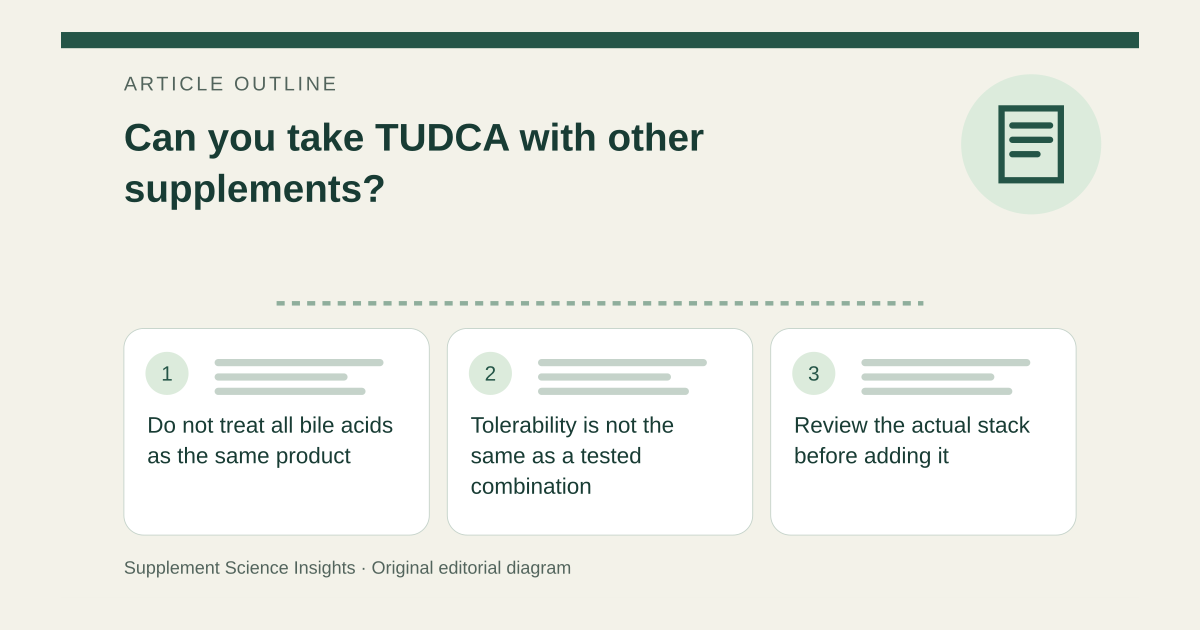
Do not treat all bile acids as the same product
A review distinguishes TUDCA from related ursodeoxycholic acid and summarizes experimental and clinical research. Results with one compound, prescribed indication or monitored study do not automatically apply to a retail TUDCA combination. Mechanistic liver-support language is not proof that a mixture prevents liver injury. [1]
Tolerability is not the same as a tested combination
The review’s human safety table includes gastrointestinal adverse effects, including diarrhea, in TUDCA studies. Even generally tolerated study use cannot establish compatibility with every herb or other supplement. Absence of a documented interaction is not the same as having tested the proposed combination. [1][2]
Review the actual stack before adding it
Imagine TUDCA is added to offset concern about another product’s effects on the liver. That assumption is unsupported and can delay recognition of harm. Bring complete labels and medicines to a pharmacist or clinician, particularly when liver or biliary disease is involved. Do not use TUDCA as permission to continue a potentially harmful product. [1][2]
| Situation | Appropriate distinction |
|---|---|
| A symptom | Identify its cause |
| A marketing promise | Check the measured outcome |
| A treatment change | Review suitability and follow-up |
Sources for this article
- Tauroursodeoxycholic acid: a potential therapeutic tool in neurodegenerative diseases - PMC
Source consulted: 2026-09-21. This is a reference resource, not a claim that we conducted the studies or tested a product. - Dietary Supplements: What You Need to Know - Consumer
Source consulted: 2026-09-21. This is a reference resource, not a claim that we conducted the studies or tested a product.