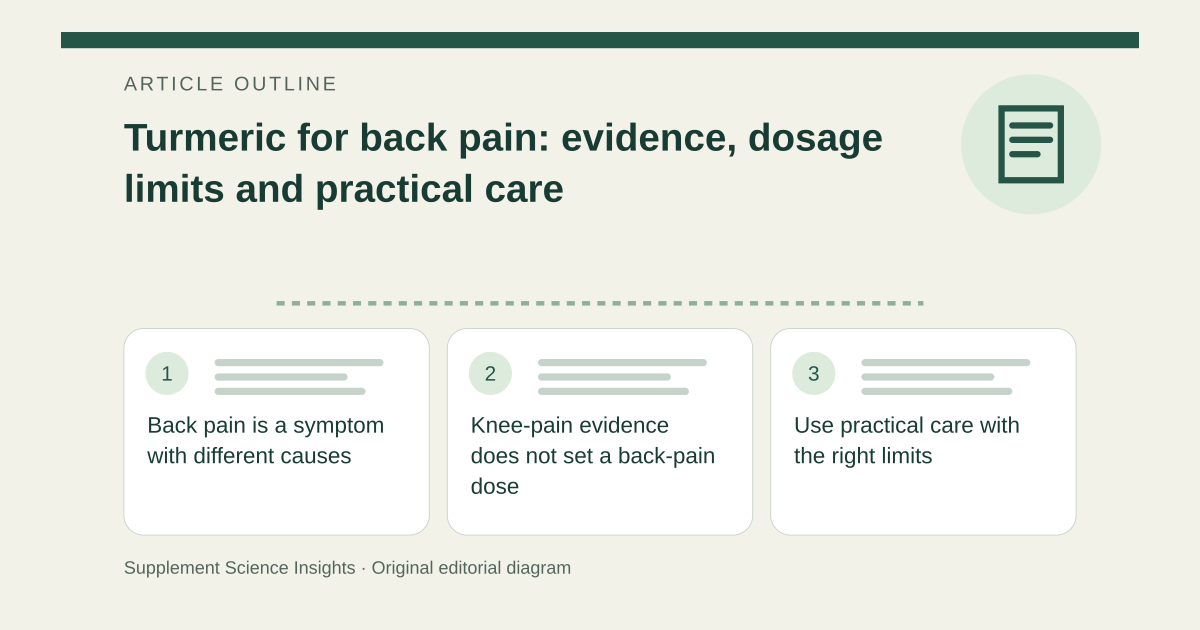
Back pain is a symptom with different causes
NHS guidance includes muscle strain, disc problems and sciatica among possible causes, while many cases do not have one obvious cause. A broad anti-inflammatory claim cannot identify which situation applies. The treatment question is more specific than whether turmeric has biological activity. [1][2]
Knee-pain evidence does not set a back-pain dose
NCCIH describes preliminary knee osteoarthritis findings and major product differences. This does not establish an effective dose for every back condition. A powder amount, concentrated extract and high-absorption preparation cannot be treated as interchangeable recommendations. [2]
Use practical care with the right limits
NHS advises staying active and avoiding prolonged bed rest for ordinary back pain, with exercise, heat or cold and suitable pain relief considered as appropriate. Ask a pharmacist or clinician which medicines fit your health history; do not assume turmeric safely replaces or combines with every painkiller. [1][2]
Recognize symptoms that need urgent care
Back pain with new bladder or bowel changes, numbness around the genitals or anus, or symptoms affecting both legs needs emergency assessment. Severe rapidly worsening pain, fever or feeling unwell also warrants prompt care. These are reasons to seek help, not to wait for a supplement trial. [1]
Review persistent limitations
Imagine a person can walk more comfortably but still cannot perform normal activities after several weeks. That warrants review of the diagnosis and rehabilitation plan. Increasing turmeric to meet a promised dose is not a substitute for that assessment. [1]
| Question | Approach |
|---|---|
| What dose of turmeric? | No established universal back-pain regimen |
| Can I stay active? | Follow appropriate activity advice |
| Pain limits daily life | Seek assessment if persistent or worsening |
| New bladder, bowel or saddle symptoms | Emergency assessment |
Sources for this article
- Back pain - NHS
Source consulted: 2026-09-21. This is a reference resource, not a claim that we conducted the studies or tested a product. - Turmeric: Usefulness and Safety | NCCIH
Source consulted: 2026-09-21. This is a reference resource, not a claim that we conducted the studies or tested a product.