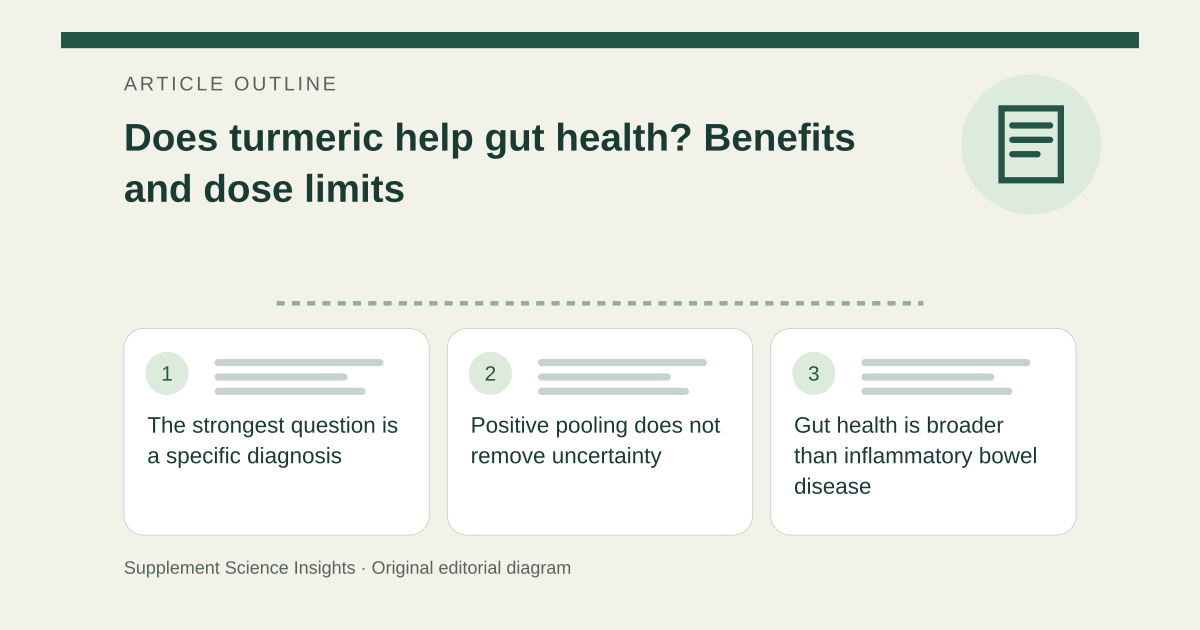
The strongest question is a specific diagnosis
A 2025 review of thirteen placebo-controlled IBD trials found favorable ulcerative-colitis clinical outcomes, with substantial differences among studies. Most trials concerned that condition. The same review did not show superiority over placebo for clinical or endoscopic remission in Crohn disease. [1]
Positive pooling does not remove uncertainty
A 2026 umbrella review found no high-certainty ulcerative-colitis outcomes and identified methodological weaknesses in the underlying reviews. These findings support cautious investigation of an adjunct, not replacing established anti-inflammatory treatment or assuming a cure. [2]
Gut health is broader than inflammatory bowel disease
Gas, constipation, intolerance and functional symptoms may cause bloating without ulcerative colitis. A curcumin effect in one diagnosed disease does not demonstrate a microbiome reset, treatment for every digestive symptom or a benefit in an otherwise healthy person. Persistent or concerning symptoms need cause-specific assessment. [3][1]
There is no universal digestive dose
The trials used different preparations, doses, durations and background treatments. A teaspoon of turmeric cannot be substituted for a standardized extract, and the pooled evidence does not identify a dose for generic gut health. Oral turmeric can also cause nausea, reflux, diarrhea or constipation rather than improving digestion. [1][4]
Review an adjunct without abandoning the plan
Imagine a person with ulcerative colitis feels less bloated after starting a supplement. That symptom change does not establish mucosal healing or justify stopping prescribed treatment. Review the actual disease outcomes and product with the treating gastroenterology team. [1][2]
| Question | Evidence boundary |
|---|---|
| Ulcerative colitis | Promising adjunctive signal, limited certainty |
| Crohn disease | No demonstrated superiority in the cited review |
| General bloating | Several distinct causes |
| Universal gut dose | Not established |
Sources for this article
- Frontiers | Curcumin for the clinical treatment of inflammatory bowel diseases: a systematic review and meta-analysis of placebo-controlled randomized clinical trials
Source consulted: 2026-09-21. This is a reference resource, not a claim that we conducted the studies or tested a product. - The Complementary and Alternative Roles of Curcumin in Treatment of Ulcerative Colitis: An Umbrella Review.
Source consulted: 2026-09-21. This is a reference resource, not a claim that we conducted the studies or tested a product. - Bloating - NHS
Source consulted: 2026-09-21. This is a reference resource, not a claim that we conducted the studies or tested a product. - Turmeric: Usefulness and Safety | NCCIH
Source consulted: 2026-09-21. This is a reference resource, not a claim that we conducted the studies or tested a product.