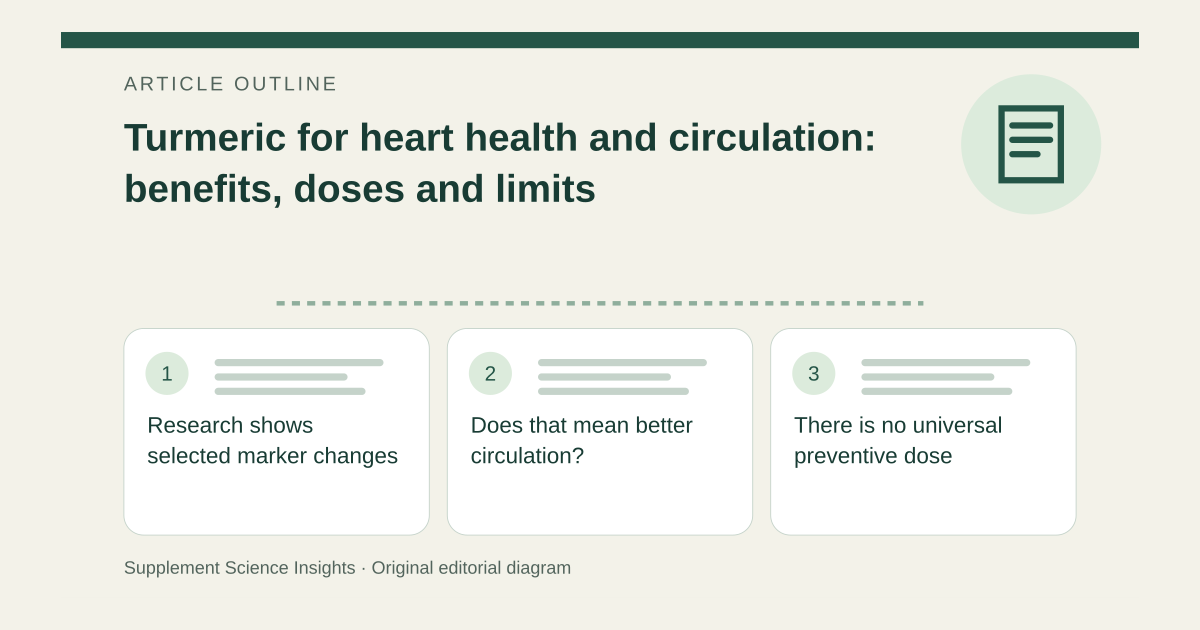
Research shows selected marker changes
A 2024 umbrella review found favorable changes in flow-mediated dilation and some other vascular measures, with a small reduction in diastolic pressure but no significant systolic-pressure change. Another review found small reductions in both pressures. These differences illustrate why a single broad claim of improved heart health overstates the consistency of the evidence. [1][2]
Does that mean better circulation?
Flow-mediated dilation measures how an artery responds under a test condition. It is relevant to vascular function, but it does not prove that a blocked leg artery has reopened or that a person will avoid a heart attack or stroke. Blood-pressure, pulse-wave and adhesion-marker findings are also not interchangeable with clinical outcomes. [1][3]
There is no universal preventive dose
The studies used different products and populations, so no single turmeric-powder amount or extract dose can be prescribed from these pooled results. Culinary turmeric can be part of food; it should not be converted by weight into a concentrated or enhanced curcumin regimen. More absorption is not automatically a better benefit-to-risk balance. [2][4]
Use measures with established cardiovascular roles
NHS prevention guidance emphasizes a balanced diet, physical activity, smoking cessation and management of blood pressure, cholesterol and diabetes. Continue prescribed treatment and have supplements reviewed for your circumstances. Some turmeric formulations can cause liver injury, and medication use makes a product-specific review especially relevant. [5][4]
Poor circulation symptoms deserve diagnosis
Recurring leg pain during walking, nonhealing foot wounds or changes in leg color or temperature may require assessment for peripheral arterial disease. Rapidly developing or suddenly worsening symptoms need immediate medical attention. Turmeric should not delay evaluation of restricted blood supply. [3]
Read the outcome before accepting the claim
Imagine a product advertises artery-clearing benefits from a study of flow-mediated dilation. The measured response is not a scan showing removal of plaque. Ask whether the study actually measured the health outcome that the advertisement promises. [1][3]
| Measure or claim | What it does not establish |
|---|---|
| Flow-mediated dilation | Removal of an arterial blockage |
| Small blood-pressure change | Replacement for prescribed treatment |
| Favorable laboratory marker | Fewer heart attacks |
| Turmeric in food | A validated extract dose |
Sources for this article
- The effect of curcumin supplementation on endothelial function and blood pressure in patients with metabolic disorders: A meta-analysis of meta-analyses.
Source consulted: 2026-09-21. This is a reference resource, not a claim that we conducted the studies or tested a product. - Curcumin/turmeric supplementation could improve blood pressure and endothelial function: A grade-assessed systematic review and dose-response meta-analysis of randomized controlled trials.
Source consulted: 2026-09-21. This is a reference resource, not a claim that we conducted the studies or tested a product. - Peripheral arterial disease (PAD) - NHS
Source consulted: 2026-09-21. This is a reference resource, not a claim that we conducted the studies or tested a product. - Turmeric: Usefulness and Safety | NCCIH
Source consulted: 2026-09-21. This is a reference resource, not a claim that we conducted the studies or tested a product. - Coronary heart disease - Prevention - NHS
Source consulted: 2026-09-21. This is a reference resource, not a claim that we conducted the studies or tested a product.