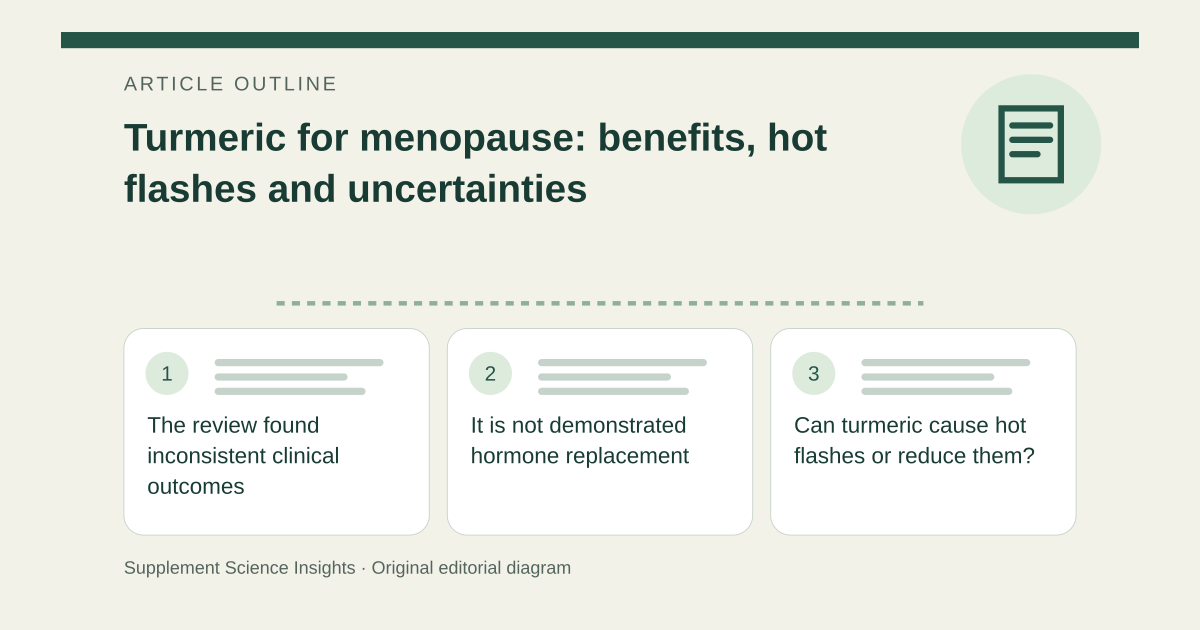
The review found inconsistent clinical outcomes
A 2025 systematic review examined twelve randomized trials in postmenopausal women. Curcumin forms, combinations and durations varied, and vasomotor symptoms such as hot flashes had conflicting results. The authors concluded that efficacy for menopause-related symptoms and biomarkers could not be established conclusively. [1]
It is not demonstrated hormone replacement
Laboratory and animal effects on estrogen-related pathways do not establish restoration of estrogen in women. The review did not find a consistent between-group hormonal benefit, and changes in metabolic or bone markers are not equivalent to relief of hot flashes or prevention of fractures. [1]
Can turmeric cause hot flashes or reduce them?
Neither a dependable hot-flash treatment nor a common causal link is established by the sources reviewed here. If flushing starts or worsens after a new supplement, record the timing, dose and full ingredient list and discuss it with a clinician. Symptoms may fluctuate during menopause, so timing alone does not prove causation or benefit. Do not deliberately repeat a product that caused a concerning reaction. [1][2]
Choose treatment for the symptom and personal risks
NHS guidance describes hormone therapy and nonhormonal options, selected according to symptoms and medical history. A clinician can help with hot flashes, sleep, mood, vaginal or urinary symptoms. Turmeric supplements may cause digestive effects and some formulations have been associated with liver injury; a natural label does not bypass a medication review. [3][2]
Do not substitute one outcome for another
Imagine a study reports a favorable blood marker but hot flashes remain unchanged. That finding does not answer whether the product improves night sweats or sleep. Follow the symptom that prompted treatment and discuss ongoing disruption rather than assuming a general menopause benefit. [1][3]
| Outcome | Question to ask |
|---|---|
| Hot flashes | Were frequency and burden improved? |
| Blood marker | Did symptoms also improve? |
| Estrogen theory | Was it demonstrated in women? |
| Flushing after a new product | What else changed, and is assessment needed? |
Sources for this article
- The Effect of Curcumin on Postmenopausal Symptoms: A Systematic Review Based on Randomized Controlled Trials - PMC
Source consulted: 2026-09-21. This is a reference resource, not a claim that we conducted the studies or tested a product. - Turmeric: Usefulness and Safety | NCCIH
Source consulted: 2026-09-21. This is a reference resource, not a claim that we conducted the studies or tested a product. - Treatment for menopause and perimenopause - NHS
Source consulted: 2026-09-21. This is a reference resource, not a claim that we conducted the studies or tested a product.