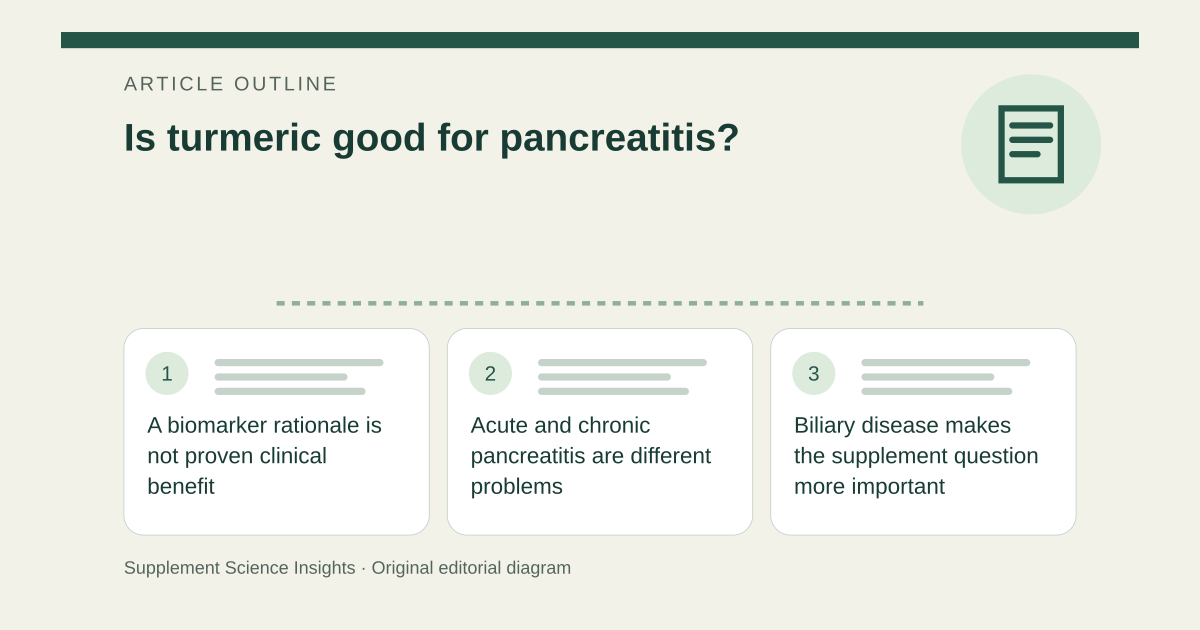
A biomarker rationale is not proven clinical benefit
An older systematic review of antioxidant therapies described very limited curcumin evidence in chronic pancreatitis. Improvements in oxidative-stress measures did not correspond to demonstrated pain improvement in that evidence. This does not establish a treatment dose or justify substituting turmeric for pancreatic care. [1]
Acute and chronic pancreatitis are different problems
Acute pancreatitis is sudden inflammation requiring urgent hospital care; chronic pancreatitis involves lasting pancreatic damage. Findings in one setting cannot automatically be applied to the other. A supplement marketed as anti-inflammatory is not a treatment for a blocked duct, severe inflammation or complications. [2][1]
Biliary disease makes the supplement question more important
Gallstones can cause acute pancreatitis. EMA guidance does not recommend medicinal turmeric in bile-duct obstruction, gallstones and other specified biliary conditions. Discuss a supplement with the treating team rather than assuming that a digestive-health label makes it appropriate after an attack. [2][3]
Do not wait on severe abdominal symptoms
Sudden severe abdominal pain, especially when it spreads to the back or occurs with a fast heartbeat or breathing difficulty, needs emergency assessment. Treatment may include monitoring, fluids, pain control and care for the underlying cause. A home turmeric regimen should not delay that evaluation. [2]
A change in a blood marker does not establish recovery
Imagine an antioxidant study reports a laboratory improvement without less pain or fewer complications. It has not answered the practical treatment question. Follow the pancreatic care plan and ask about food or supplement tolerance individually. [1][2]
| Question | Approach |
|---|---|
| Sudden severe pain | Urgent or emergency assessment |
| Chronic symptoms | Cause-specific pancreatic care |
| Oxidative marker improvement | Not proof of pain relief |
| Gallstones or duct disease | Review medicinal turmeric safety |
Sources for this article
- Antioxidant therapy in the management of acute, chronic and post-ERCP pancreatitis: A systematic review - PMC
Source consulted: 2026-09-21. This is a reference resource, not a claim that we conducted the studies or tested a product. - Acute pancreatitis - NHS
Source consulted: 2026-09-21. This is a reference resource, not a claim that we conducted the studies or tested a product. - European Union herbal monograph on Curcuma longa L., rhizoma - Revision 1
Source consulted: 2026-09-21. This is a reference resource, not a claim that we conducted the studies or tested a product.