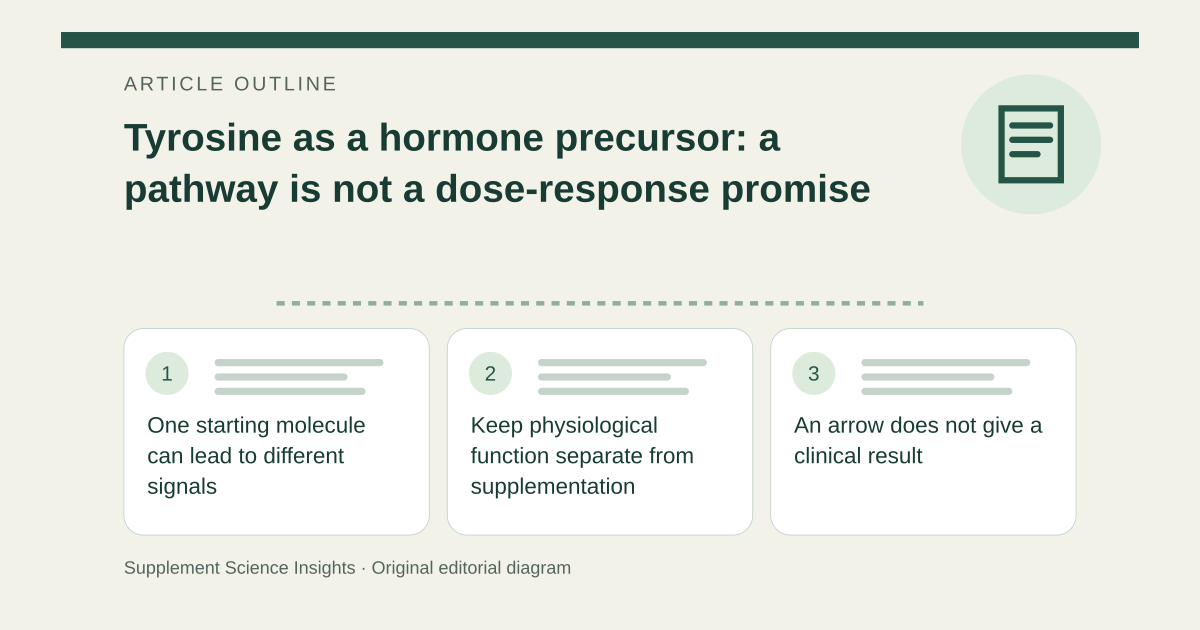
One starting molecule can lead to different signals
OpenStax identifies tyrosine as a precursor for thyroid hormones and for catecholamines, including dopamine, norepinephrine and epinephrine. These are different molecules with different biological roles, not interchangeable forms of tyrosine. [1]
The precursor relationship describes where part of a molecule comes from. It does not state how fast a pathway runs or whether precursor supply is the factor controlling it. [1]
Keep physiological function separate from supplementation
A diagram showing tyrosine upstream of a hormone is insufficient evidence for a supplement claim. Demonstrating a benefit would require studies of the particular intervention, population and outcome rather than the diagram alone. [1]
This distinction matters when a product promises to support several hormone systems with one ingredient. The shared starting material does not establish that all those systems respond beneficially to additional intake. [1]
An arrow does not give a clinical result
Imagine a label shows tyrosine followed by an arrow to dopamine. That graphic identifies a biochemical relationship. It does not tell a reader whether the tested product changes symptoms, at what dose, or with what risks.
| Detail | Interpretation |
|---|---|
| Tyrosine | Precursor |
| Hormone synthesis | A regulated pathway |
| Supplement benefit | Requires separate evidence |
Sources for this article
- 17.2 Hormones - Anatomy and Physiology 2e | OpenStax
Source consulted: 2026-09-17. This is a reference resource, not a claim that we conducted the studies or tested a product.