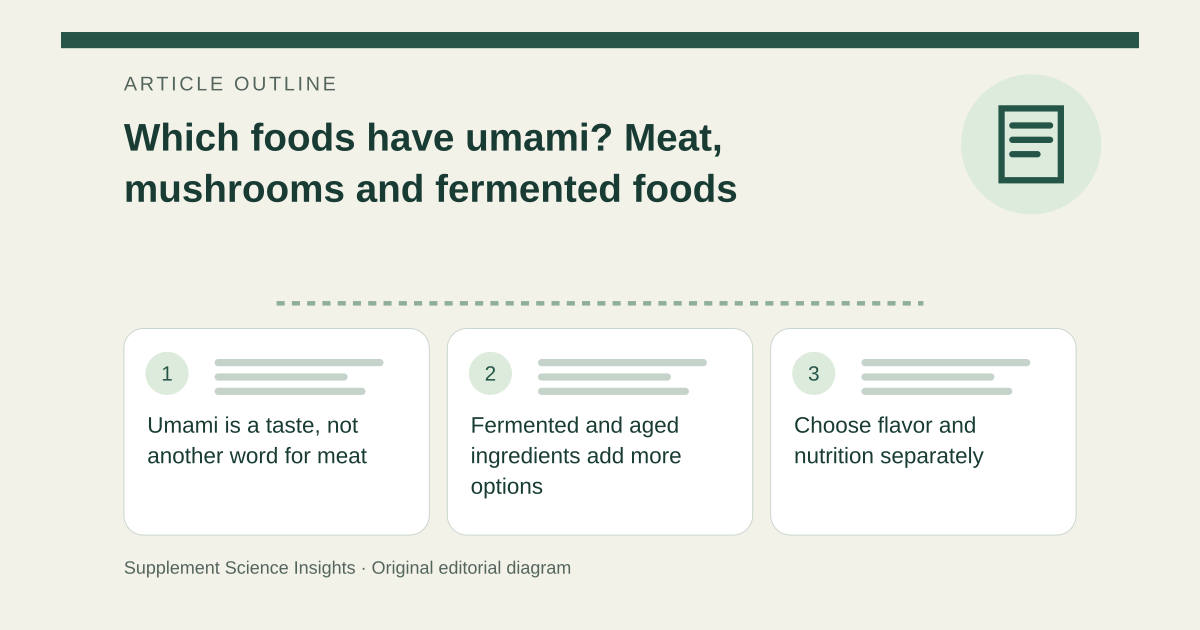
Umami is a taste, not another word for meat
The Umami Information Center describes glutamate in meat, fish and vegetables. Inosinate is prominent in meat and fish, while dried mushrooms such as shiitake can supply guanylate. These different sources explain why a meat-free dish can still have a savory character. [1]
Fermented and aged ingredients add more options
Soy sauce, fish sauces and aged cheeses are examples of umami-rich ingredients described by the center. Processing can release or increase taste-active components, so an aged or fermented food need not taste like its starting material. Preparation and the amount used affect the finished dish. [1]
Choose flavor and nutrition separately
Imagine adding a small amount of soy sauce or aged cheese to a dish for savory flavor. Compare the product’s sodium per actual serving when salt intake matters. A strong umami taste does not measure protein content or establish that a food meets a dietary need; use its nutrition information for that question. [2][1]
| Food category | Useful distinction |
|---|---|
| Meat or fish | Sources of umami compounds |
| Dried shiitake | A meat-free savory option |
| Fermented condiment | Check serving size and sodium |
Sources for this article
- What is Umami | Umami Information Center
Source consulted: 2026-09-20. This is a reference resource, not a claim that we conducted the studies or tested a product. - How to Understand and Use the Nutrition Facts Label | FDA
Source consulted: 2026-09-20. This is a reference resource, not a claim that we conducted the studies or tested a product.