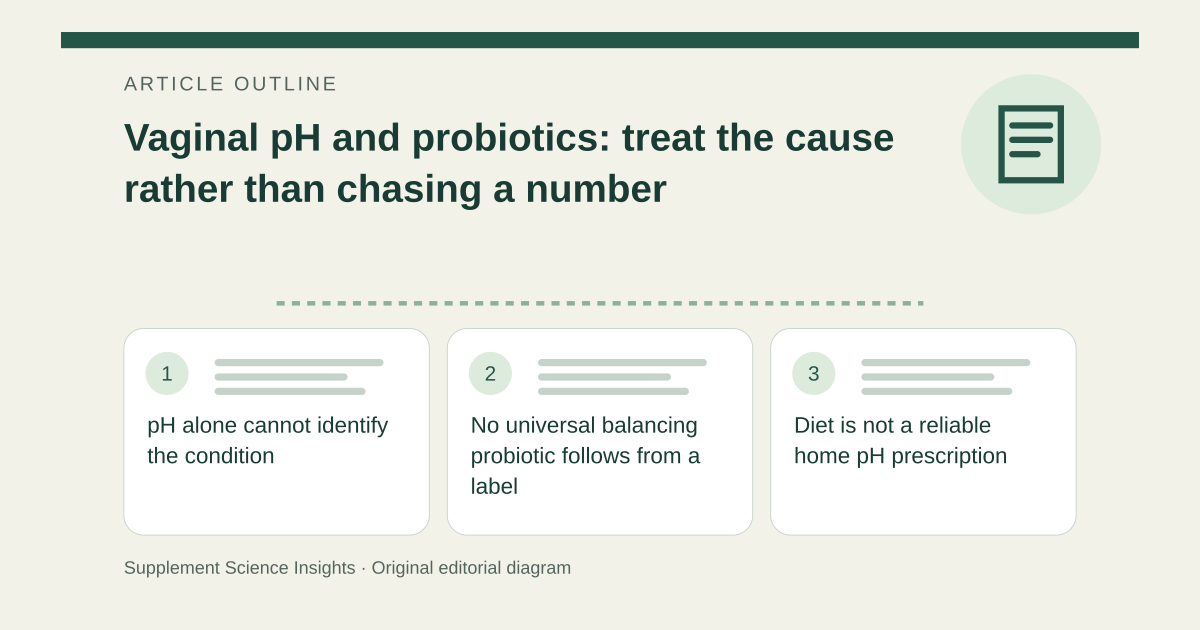
pH alone cannot identify the condition
CDC includes vaginal pH above 4.5 among the clinical criteria for bacterial vaginosis, but diagnosis requires additional findings. Candida vaginitis is usually associated with a pH below 4.5. A normal-range result therefore does not exclude every problem, and an elevated result is not a complete treatment instruction. [1][2]
No universal balancing probiotic follows from a label
The inspected CDC guidance does not support available probiotic products as adjunctive or replacement treatment for bacterial vaginosis and finds no substantial evidence for treating vaginal candidiasis with probiotics. A strain list or high organism count cannot substitute for a diagnosis-specific plan. [1][2]
Diet is not a reliable home pH prescription
A nutritious diet can serve general needs, but the cited guidance does not establish a food regimen that diagnoses or treats abnormal vaginal symptoms by adjusting pH. Avoid inserting yogurt, foods or homemade supplement mixtures as a self-treatment; an oral food product does not establish an appropriate vaginal preparation. [1][2][3]
Avoid adding irritation while seeking an answer
NHS advises against douching and scented products in or around the vagina. Hormonal changes, skin conditions and irritants can produce symptoms as well as infections. Seek assessment for new, persistent or unusual symptoms, especially with pelvic pain or feeling feverish. [4]
Use a test result as context for care
Imagine a home strip reads above its stated range and a probiotic advertises balance. Record symptoms and the result for a clinician rather than assuming the strip identifies the cause or the product supplies the cure. Treatment may involve a medicine or a different approach depending on the diagnosis. [1][4]
| Finding | What it does not establish |
|---|---|
| Elevated pH | A complete diagnosis |
| Normal-range pH | Absence of all vaginal disease |
| Probiotic balance claim | Effective treatment for the cause |
Sources for this article
- Bacterial Vaginosis - STI Treatment Guidelines
Source consulted: 2026-09-21. This is a reference resource, not a claim that we conducted the studies or tested a product. - Vulvovaginal Candidiasis - STI Treatment Guidelines
Source consulted: 2026-09-21. This is a reference resource, not a claim that we conducted the studies or tested a product. - Probiotics - Health Professional Fact Sheet
Source consulted: 2026-09-21. This is a reference resource, not a claim that we conducted the studies or tested a product. - Vaginitis - NHS
Source consulted: 2026-09-21. This is a reference resource, not a claim that we conducted the studies or tested a product.