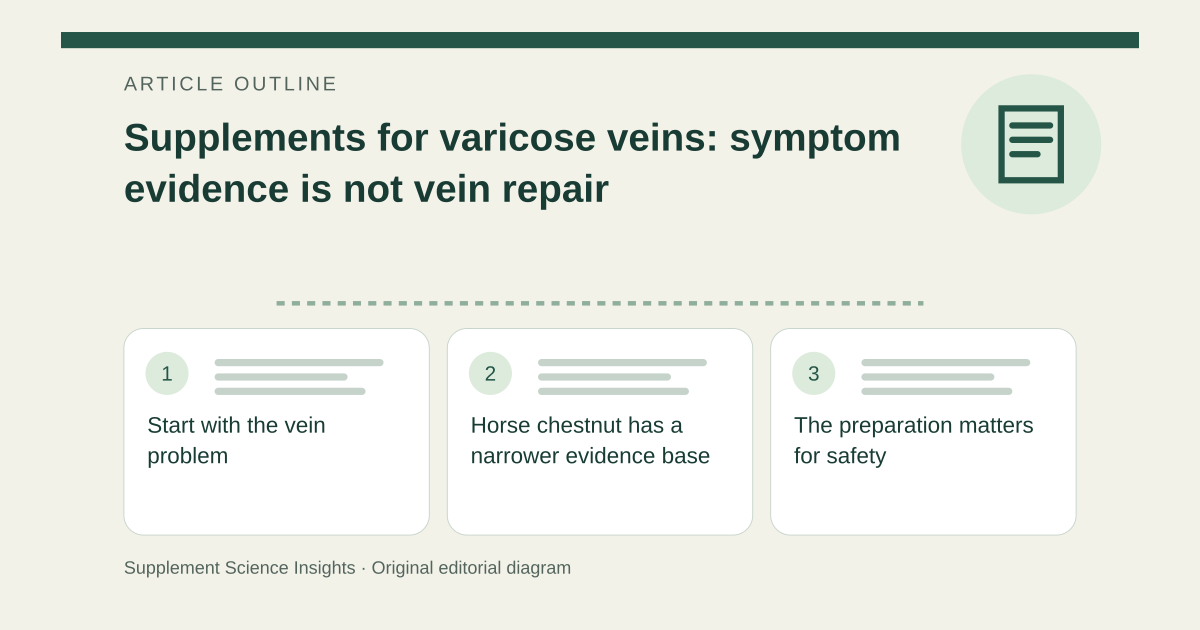
Start with the vein problem
Varicose veins are enlarged, twisted veins that may cause aching, swelling or skin changes. NHS guidance describes assessment and options such as ablation, sclerotherapy, surgery or compression in appropriate circumstances. Choosing a vitamin does not establish which treatment is suitable. [1]
Horse chestnut has a narrower evidence base
NCCIH describes evidence that horse chestnut seed extract may help some chronic venous insufficiency symptoms, while larger, better studies are needed. Symptom improvement does not demonstrate that an extract removes varicose veins or replaces a procedure. [2]
The preparation matters for safety
Raw horse chestnut seeds, bark, flowers and leaves are unsafe because they contain a toxic component. The studied standardized extracts are processed differently. Do not make a homemade substitute or assume every product has the same composition and safety. [2]
A vitamin label is not a repair claim
Evidence about nutrient physiology or antioxidant activity is not proof of improved vein valves. Review any proposed product alongside medicines and the actual symptom target, and do not delay care for worsening skin changes or other concerning symptoms. [3][1]
Judge the outcome accurately
Imagine leg heaviness improves while visible veins remain. That would be a symptom change, not proof that the veins have been repaired. Discuss persistent swelling or skin changes and the established treatment options with the clinician. [1][2]
| Concern | Relevant distinction |
|---|---|
| Leg heaviness improves | Not proof of valve repair |
| Horse chestnut | Only preparation-specific evidence |
| Raw horse chestnut parts | Unsafe to ingest |
Sources for this article
- Varicose veins - NHS
Source consulted: 2026-09-20. This is a reference resource, not a claim that we conducted the studies or tested a product. - Horse Chestnut: Usefulness and Safety | NCCIH
Source consulted: 2026-09-20. This is a reference resource, not a claim that we conducted the studies or tested a product. - Dietary Supplements: What You Need to Know
Source consulted: 2026-09-20. This is a reference resource, not a claim that we conducted the studies or tested a product.