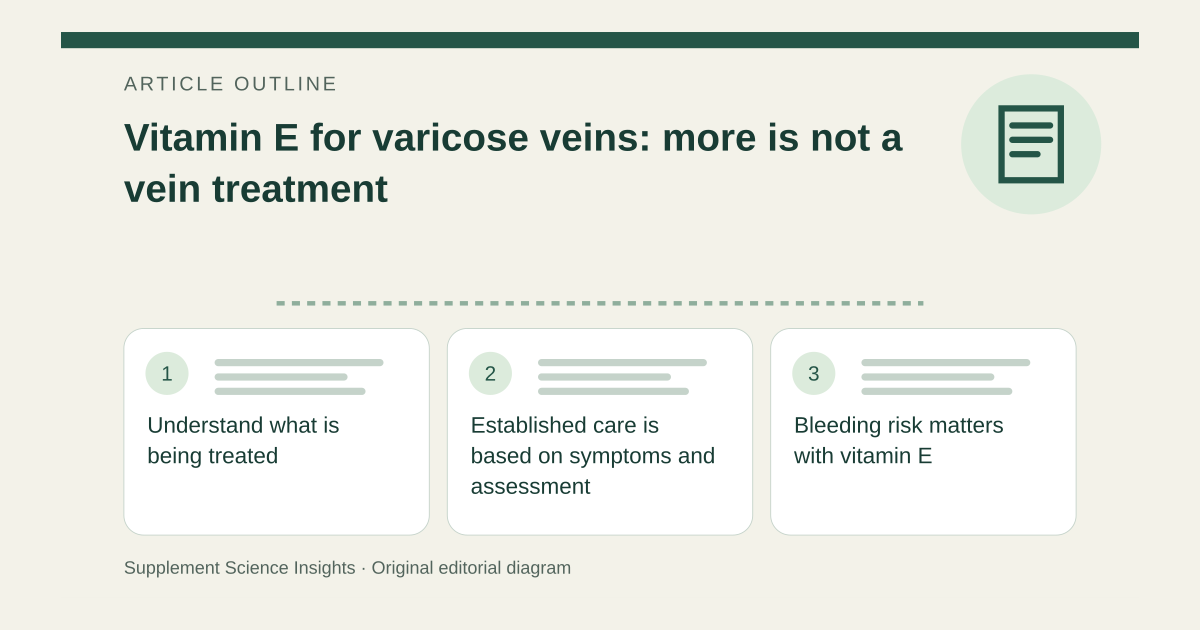
Understand what is being treated
Varicose veins develop when valves controlling blood flow do not work properly. Symptoms can include aching, heaviness, swelling and skin changes. Vitamin E’s nutritional role does not establish that swallowing it repairs those valves. [1][2]
Established care is based on symptoms and assessment
NHS describes regular movement, leg elevation and avoiding prolonged standing or sitting as practical measures. Specialist assessment can include duplex ultrasound and treatment such as endothermal ablation, foam sclerotherapy, surgery or selected compression use. The choice depends on the individual vein problem. [1]
Bleeding risk matters with vitamin E
NIH warns that vitamin E supplements can increase bleeding risk, especially alongside anticoagulant or antiplatelet medicines. Do not use a high dose as an assumed circulation aid. Review supplements before a vein procedure and follow the treating team’s instructions. [2]
Do not delay care for a complication
Imagine an enlarged vein begins bleeding or a leg sore does not heal. NHS advises urgent help for bleeding varicose veins and assessment for persistent sores. Changing a vitamin dose does not address those complications. [1]
| Situation | Relevant next step |
|---|---|
| Aching or swelling | Discuss symptom management and assessment |
| Blood-thinning medicine | Review vitamin E interaction risk |
| Bleeding vein | Get urgent medical help |
Sources for this article
- Varicose veins - NHS
Source consulted: 2026-09-20. This is a reference resource, not a claim that we conducted the studies or tested a product. - Vitamin E - Health Professional Fact Sheet
Source consulted: 2026-09-20. This is a reference resource, not a claim that we conducted the studies or tested a product.