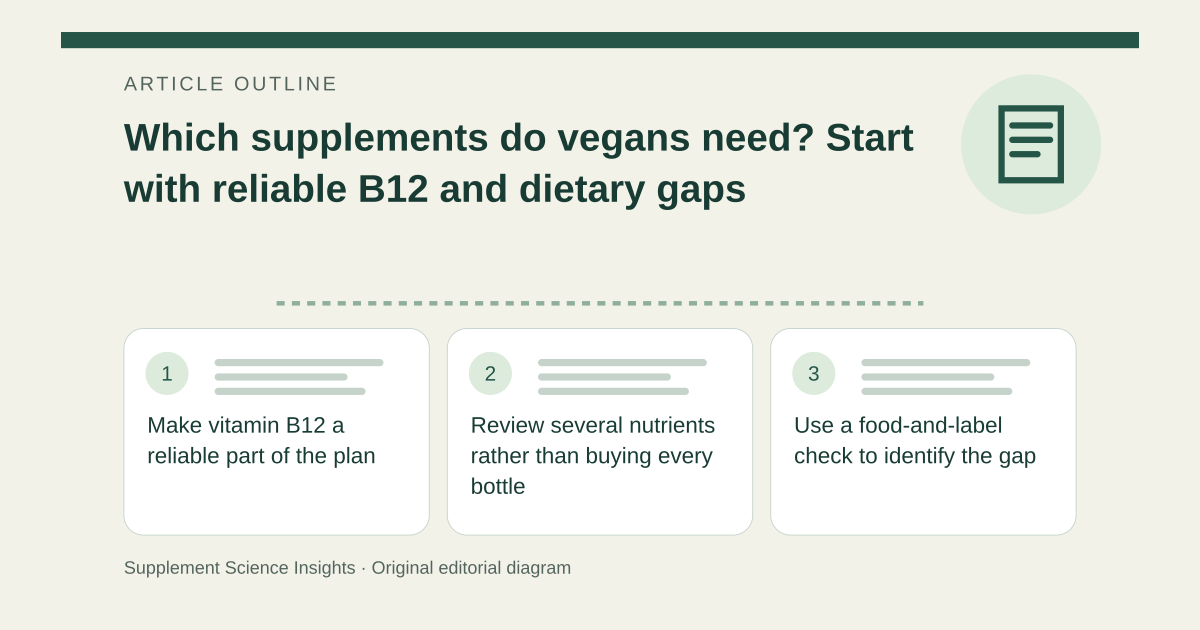
Make vitamin B12 a reliable part of the plan
ODS identifies people eating little or no animal food as at risk of inadequate B12 unless they use reliable fortified foods or supplements. Do not count on an unfortified plant food simply because it is marketed as natural. A prevention plan and treatment of an established deficiency can require different approaches. [1]
Review several nutrients rather than buying every bottle
NHS guidance highlights vitamin D, iodine, selenium and calcium alongside B12 when planning fortified foods or supplements. Iron intake and absorption also deserve attention. These are nutritional review points, not instructions for every vegan to take high doses of every nutrient. Pregnancy, childhood and medical conditions call for tailored advice. [2]
Use a food-and-label check to identify the gap
Imagine someone drinks a plant beverage but assumes all versions contain B12 and calcium. Compare its label with the rest of the diet; an unfortified version may contribute neither in useful amounts. A dietitian can help turn that review into an appropriate supplement plan without duplicating nutrients across several products. [2][1][3]
| Question | Interpretation |
|---|---|
| B12 | Ensure a dependable fortified or supplemental source |
| Other nutrients | Review food intake and individual needs |
| Several supplements | Check for duplicate ingredients |
Sources for this article
- Vitamin B12 - Health Professional Fact Sheet
Source consulted: 2026-09-20. This is a reference resource, not a claim that we conducted the studies or tested a product. - The vegan diet - NHS
Source consulted: 2026-09-20. This is a reference resource, not a claim that we conducted the studies or tested a product. - How to Understand and Use the Nutrition Facts Label | FDA
Source consulted: 2026-09-20. This is a reference resource, not a claim that we conducted the studies or tested a product.