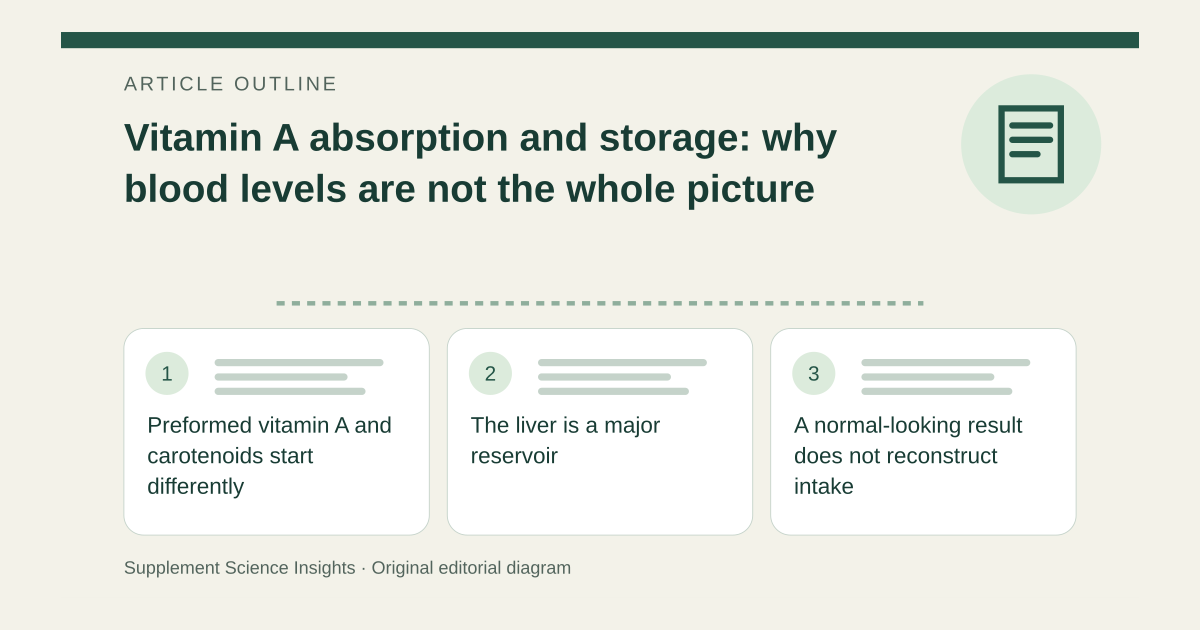
Preformed vitamin A and carotenoids start differently
The diet supplies preformed vitamin A as retinol and retinyl esters, as well as provitamin A carotenoids that can be converted into vitamin A. These forms enter fat-digestion pathways and are processed during intestinal uptake. [1]
Not every carotenoid is a vitamin A precursor. ODS distinguishes beta-carotene and certain other provitamin A compounds from carotenoids such as lutein and lycopene, which are not converted into vitamin A. [1]
The liver is a major reservoir
Most body vitamin A is stored in the liver as retinyl esters. This reserve means that circulating retinol may not fall until stores are substantially depleted. Infection can also lower circulating retinol independently of a simple intake estimate. [1]
Consequently, a blood value should not be interpreted as a direct measurement of the entire body reserve. Research methods for assessing stores are different from assuming that one routine result tells the whole story. [1]
A normal-looking result does not reconstruct intake
Imagine someone with a restricted diet assumes a single blood retinol value proves that their long-term intake is adequate. The body’s storage and regulation complicate that inference.
A useful assessment considers the diet, medical context and the reason for testing. This example does not mean every result is unhelpful; it explains why context matters.
| Observation | Interpretation |
|---|---|
| Food or supplement amount | Describes intake |
| Blood retinol | A context-dependent circulating measure |
| Liver stores | Not directly established by a single routine result |
Stored nutrient is not a reason to load up
Excess preformed vitamin A can accumulate and cause toxicity, including liver-related effects. The presence of a storage system does not make repeated high doses a safe way to create a nutritional reserve. [1]
Keep the form, amount and clinical purpose clear when reviewing supplements. This page does not provide a loading dose, detoxification plan or a personalized interpretation of liver or blood tests. [1]
Sources for this article
- NIH ODS — Vitamin A: Health Professional Fact Sheet
Source consulted: 2026-09-17. This is a reference resource, not a claim that we conducted the studies or tested a product.