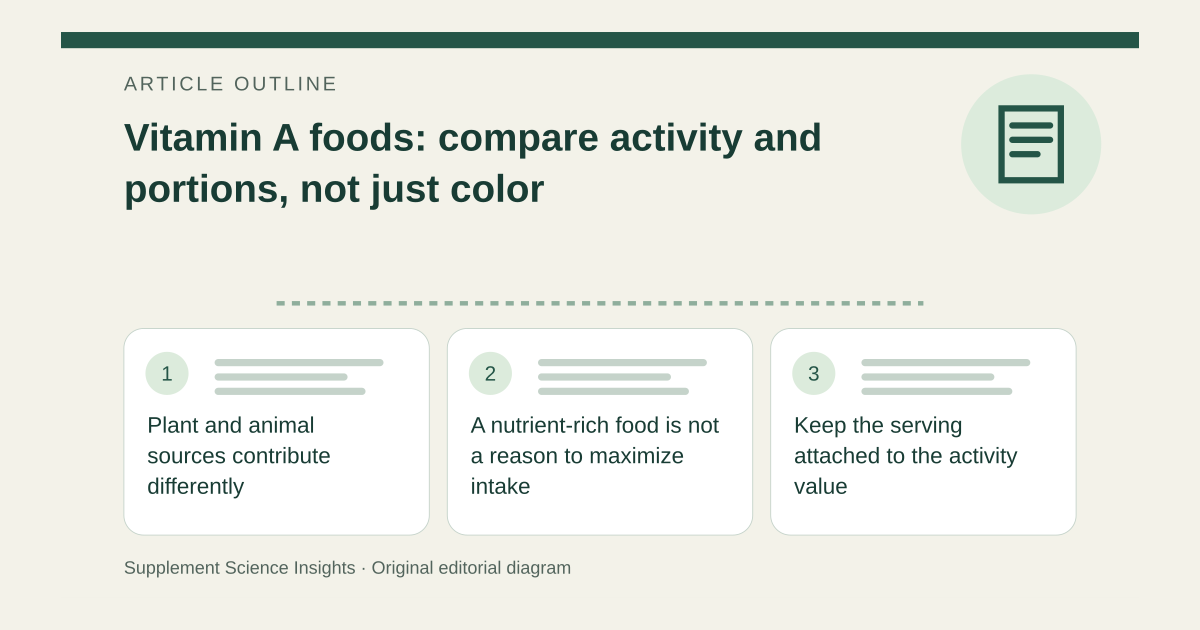
Plant and animal sources contribute differently
ODS lists 1,403 micrograms RAE in a whole sweet potato baked in its skin, 573 micrograms RAE in half a cup of boiled frozen spinach and 459 micrograms RAE in half a cup of raw carrots. These are specified food portions, not equal weights. [1]
Animal foods such as eggs, dairy and liver supply preformed vitamin A. Plant sources mainly provide provitamin A carotenoids. A mixed meal may contribute both, so a total activity value does not always identify the preformed portion. [1]
A nutrient-rich food is not a reason to maximize intake
Liver is unusually concentrated in preformed vitamin A. Its intake needs different consideration from carotenoid-rich vegetables, especially during pregnancy or when other preformed vitamin A products are used. [1]
Cooking can improve beta-carotene availability from some foods. A raw-food claim does not automatically establish greater vitamin A value, and the color of a food does not supply a quantitative nutrient measurement. Use a matching food entry and retain its preparation. [1]
Keep the serving attached to the activity value
Imagine a comparison uses a whole sweet potato and half a cup of carrots. It can compare those stated servings, but it cannot claim that the same weight of sweet potato always contains the same multiple of vitamin A. The serving denominator is part of the finding.
| Entry | Meaning |
|---|---|
| mcg RAE | Vitamin A activity |
| Named serving | Required denominator |
| Preformed share | Separate safety-relevant information |
Sources for this article
- NIH ODS: Vitamin A and Carotenoids
Source consulted: 2026-09-17. This is a reference resource, not a claim that we conducted the studies or tested a product.