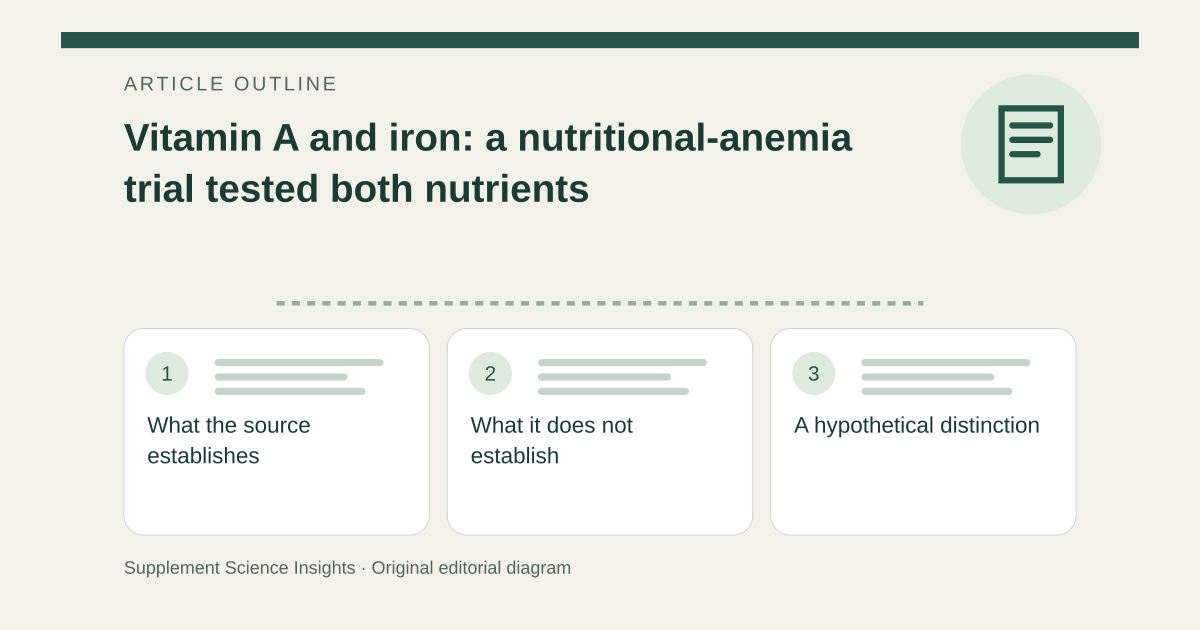
What the source establishes
In West Java, 251 anemic pregnant women were randomized to vitamin A, iron, both or placebos for eight weeks. The four-arm design allowed the contributions of the nutrients to be compared. [1]
The combination produced the largest hemoglobin response and the highest proportion no longer classified as anemic. Iron alone also improved the outcome, while vitamin A contributed a smaller component. [1]
What it does not establish
The trial concerned a specific nutritional and pregnancy setting. It does not establish that anemia always reflects both deficiencies, nor does it provide a universal prenatal dose. Funding and conflicts were not established from the abstract; individual deficiency treatment requires clinical assessment. [1]
A hypothetical distinction
Imagine two shortages coexist and replacing both works better than replacing one. That does not imply a person without the second shortage benefits from adding more of that nutrient.
| Detail | Interpretation |
|---|---|
| Four groups | Nutrient contributions compared |
| Specific anemia setting | Population matters |
| Universal prenatal regimen | Not established |
Sources for this article
- Supplementation with vitamin A and iron for nutritional anaemia in pregnant women in West Java, Indonesia - PubMed
Source consulted: 2026-09-19. This is a reference resource, not a claim that we conducted the studies or tested a product.