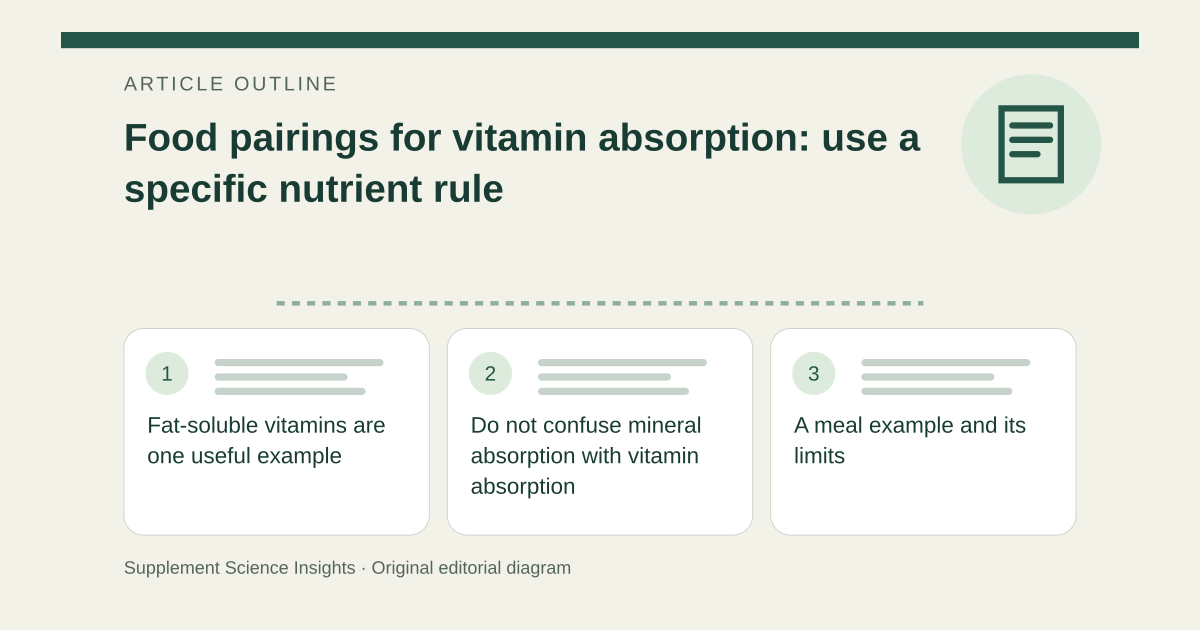
Fat-soluble vitamins are one useful example
Vitamins A,D,E and K are fat soluble. MedlinePlus notes that dietary fat helps their absorption. NIH ODS specifically reports that vitamin D absorption is enhanced by fat in the intestine, while some is absorbed without it. A usual meal containing some fat can be useful; this is not evidence that extra oil or a very fatty meal is necessary. [1][2]
Do not confuse mineral absorption with vitamin absorption
Pairing vitamin-C-containing food with plant iron can improve nonheme iron absorption. That example concerns absorption of iron, a mineral; it does not mean iron is required for the body to absorb vitamin C. Keep the direction of the effect clear when evaluating pairing advice. [3]
A meal example and its limits
Imagine vegetables are eaten in a mixed meal that contains some fat, or beans are served with a vitamin-C-containing vegetable. These illustrate different mechanisms, not a universal absorption multiplier. They do not overcome every digestive disorder or medication interaction; a diagnosed malabsorption problem needs an assessment of its cause. [1][2][3]
| Hypothetical pairing | Specific point |
|---|---|
| Vitamin D with a meal containing some fat | Fat can enhance D absorption |
| Beans plus a vitamin-C-containing food | C supports nonheme iron absorption |
| Extra fat with every supplement | Not a universal evidence-based requirement |
Sources for this article
- Vitamins: MedlinePlus Medical Encyclopedia
Source consulted: 2026-09-20. This is a reference resource, not a claim that we conducted the studies or tested a product. - Vitamin D - Health Professional Fact Sheet
Source consulted: 2026-09-20. This is a reference resource, not a claim that we conducted the studies or tested a product. - Vitamin C - Health Professional Fact Sheet
Source consulted: 2026-09-20. This is a reference resource, not a claim that we conducted the studies or tested a product.