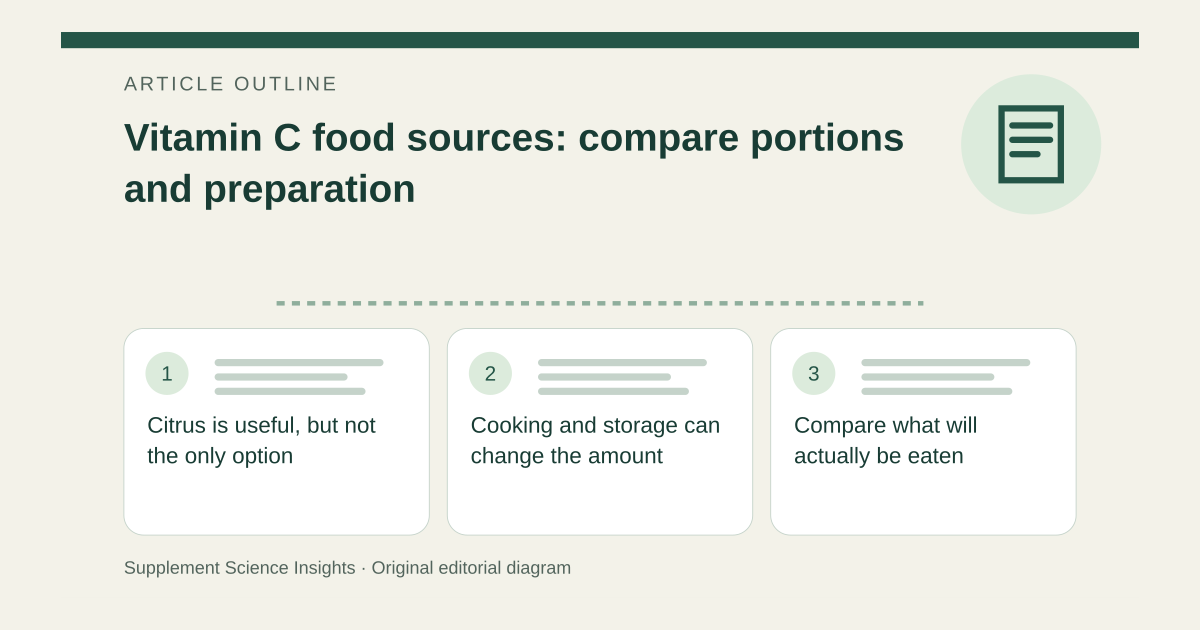
Citrus is useful, but not the only option
ODS lists many vitamin C sources besides oranges, including sweet peppers, kiwifruit, broccoli, strawberries and Brussels sprouts. A varied menu can provide the nutrient without relying on one particular fruit or a supplement. [1]
In its food table, half a cup of raw sweet red pepper supplies about 95 mg, one medium orange 70 mg and one medium kiwi 64 mg. These are food-composition values for stated servings, not a guarantee that every individual item has exactly that content. [1]
Cooking and storage can change the amount
Vitamin C is water soluble and sensitive to heat. Prolonged storage and cooking can reduce the amount in food; steaming or microwaving may limit cooking losses. The size of a loss depends on the conditions rather than one universal percentage. [1]
A comparison should keep the food state and portion clear. Half a cup of cooked broccoli and half a cup of raw broccoli do not contain identical quantities of the original vegetable, so their listed vitamin C amounts alone cannot measure the effect of cooking. [1]
Compare what will actually be eaten
Imagine someone compares a medium orange with a small spoonful of pepper and concludes that oranges always provide more vitamin C. The portions differ, so the comparison does not establish a ranking of the foods on an equal basis.
For meal planning, realistic servings are useful. For a nutrient-density comparison, equal weights may be more informative. State which question the numbers answer.
| Detail | Meaning |
|---|---|
| Food state | Raw and cooked entries differ |
| Portion | Use the amount actually eaten |
| Composition estimate | Useful for planning, not laboratory analysis of a specific fruit |
Use variety rather than a single-food guarantee
ODS notes that several varied servings of fruit and vegetables can provide substantial vitamin C. Fortified products may contribute too, but their content should be checked on the actual label. [1]
An adequate food supply does not prove that a person with malabsorption or a highly restricted diet has adequate status. This page compares sources; it does not diagnose deficiency or prescribe a therapeutic intake. [1]
Sources for this article
- NIH ODS — Vitamin C: Health Professional Fact Sheet
Source consulted: 2026-09-17. This is a reference resource, not a claim that we conducted the studies or tested a product.