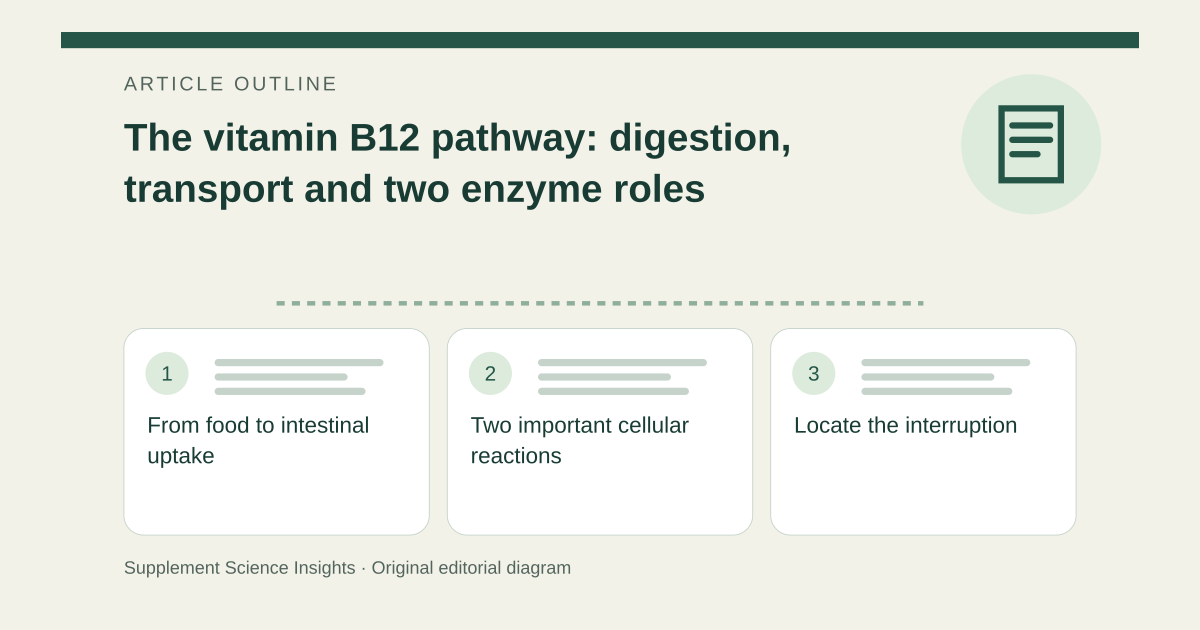
From food to intestinal uptake
Food-bound B 12 must be released during digestion. It binds haptocorrin, then digestive enzymes in the small intestine free it to combine with intrinsic factor, a protein from stomach cells. That complex is taken up in the distal ileum. B 12 in fortified foods and supplements is already free from food protein, but this does not eliminate every possible absorption problem. [1]
Two important cellular reactions
B 12 supports methionine synthase, which converts homocysteine to methionine, and methylmalonyl-CoA mutase, which converts methylmalonyl-CoA to succinyl-CoA. These reactions help explain why homocysteine and methylmalonic acid can change with inadequate B 12. The markers are not perfectly specific: kidney function and other factors influence interpretation. [1]
Locate the interruption
Imagine one person has low dietary intake and another has lost part of the absorbing intestine. Both can have low B 12, but adding a food source addresses different constraints in the two cases. A description of the pathway cannot select a treatment route without identifying the cause and clinical context. [1]
| Hypothetical finding | Relevant part of the pathway |
|---|---|
| Few reliable B 12 foods | Intake |
| Reduced intrinsic factor | Absorption |
| Raised MMA | Functional marker requiring interpretation |
Sources for this article
- Vitamin B12 - Health Professional Fact Sheet
Source consulted: 2026-09-20. This is a reference resource, not a claim that we conducted the studies or tested a product.