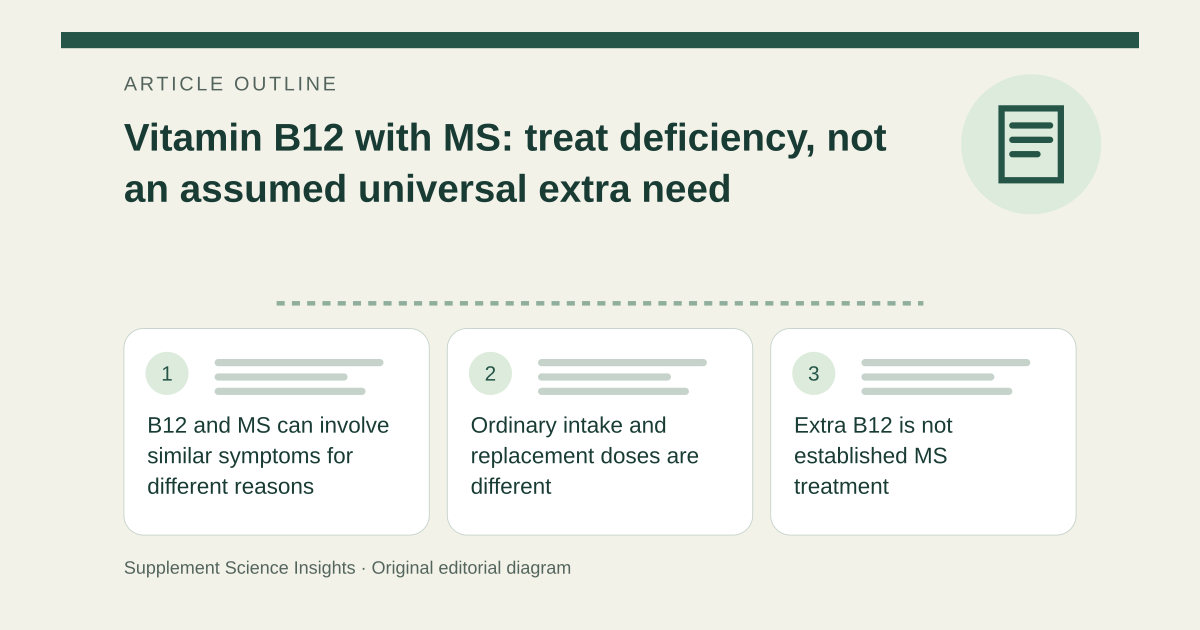
B12 and MS can involve similar symptoms for different reasons
B12 supports the nervous system and myelin. The MS Society notes that deficiency can cause symptoms resembling MS, while the connection between B12 and MS itself remains unclear. New symptoms should be assessed rather than assumed to be either a relapse or a vitamin problem. [1]
Ordinary intake and replacement doses are different
NIH lists 2.4 micrograms daily as the recommended intake for most nonpregnant adults. That total dietary target is not a prescription for treating deficiency. The replacement route and amount depend on factors such as absorption problems and clinical findings. [2]
Extra B12 is not established MS treatment
The MS Society advises discussing concerns about B12 status with a clinician and considering a blood test. It reports no demonstrated benefit from supplementation when B12 is already sufficient. Dietary restriction, especially low animal-food intake without reliable fortified alternatives, can make adequacy worth reviewing. [1]
Use the result to guide the next step
Imagine a person with MS develops tingling and starts high-dose B12 without telling their care team. Report the symptoms and all supplements so assessment can consider both MS and deficiency. A nutrient response should not be used to make or overturn a neurological diagnosis by itself. [1][2]
| Situation | Relevant next step |
|---|---|
| Adequate B12 status | No established extra MS benefit |
| Possible deficiency | Discuss testing and cause |
| Confirmed deficiency | Individualized replacement, not just the dietary target |
Sources for this article
- MS Society: Diet and MS, December 2024
Source consulted: 2026-09-20. This is a reference resource, not a claim that we conducted the studies or tested a product. - Vitamin B12 - Health Professional Fact Sheet
Source consulted: 2026-09-20. This is a reference resource, not a claim that we conducted the studies or tested a product.