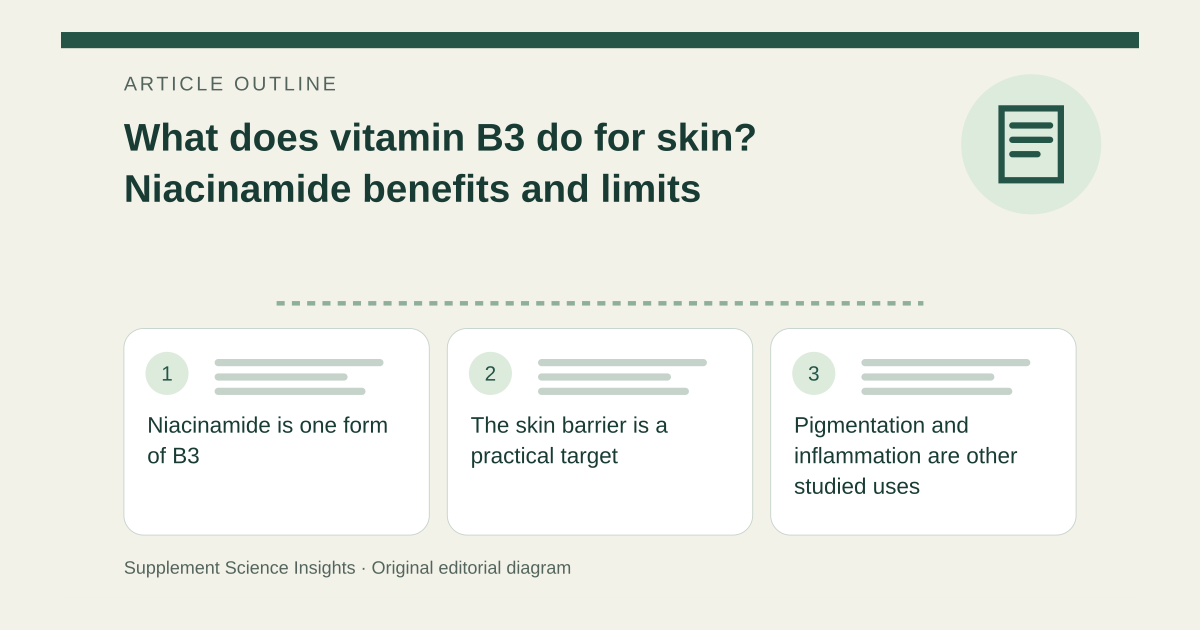
Niacinamide is one form of B3
Niacinamide, also called nicotinamide, is related to the coenzymes NAD and NADP used in cellular reactions. Niacin is a broader nutritional term that also includes nicotinic acid. Products bearing a B3-related name are not automatically interchangeable in dose, effects or tolerability. [1][2]
The skin barrier is a practical target
DermNet describes reduced water loss and improved hydration with topical nicotinamide, including effects on barrier lipids such as ceramides. A better-hydrated barrier can improve comfort and appearance. This is more specific than saying that a cream reverses aging or rebuilds every damaged structure. [2]
Pigmentation and inflammation are other studied uses
The dermatology summary describes improvements in uneven pigmentation, blotchiness, oiliness and selected inflammatory skin concerns. Results depend on the formulation and condition. A persistent or changing dark lesion still needs diagnosis; a cosmetic brightening ingredient does not identify its cause. [2]
Oral deficiency treatment is a different situation
Severe niacin deficiency causes pellagra, which can include a sun-sensitive dermatitis along with other systemic problems. Treating that deficiency is not the same as using a facial serum. High-dose oral niacin can produce adverse effects, and specialist nicotinamide uses should not be generalized into a routine beauty supplement. [1][2]
Choose the route that matches the evidence
Imagine a moisturizer containing niacinamide improves dryness. That does not show that a high-dose oral B3 capsule will produce a stronger result. Evaluate the actual skin concern, product tolerance and route; nicotinamide also does not replace sunscreen. [2][1]
| Use | Important distinction |
|---|---|
| Topical niacinamide | Barrier and selected cosmetic outcomes |
| Severe niacin deficiency | A medical nutritional problem |
| High-dose oral product | Different exposure and safety considerations |
| Sun protection | Not replaced by niacinamide |
Sources for this article
- Niacin - Health Professional Fact Sheet
Source consulted: 2026-09-21. This is a reference resource, not a claim that we conducted the studies or tested a product. - Nicotinamide
Source consulted: 2026-09-21. This is a reference resource, not a claim that we conducted the studies or tested a product.