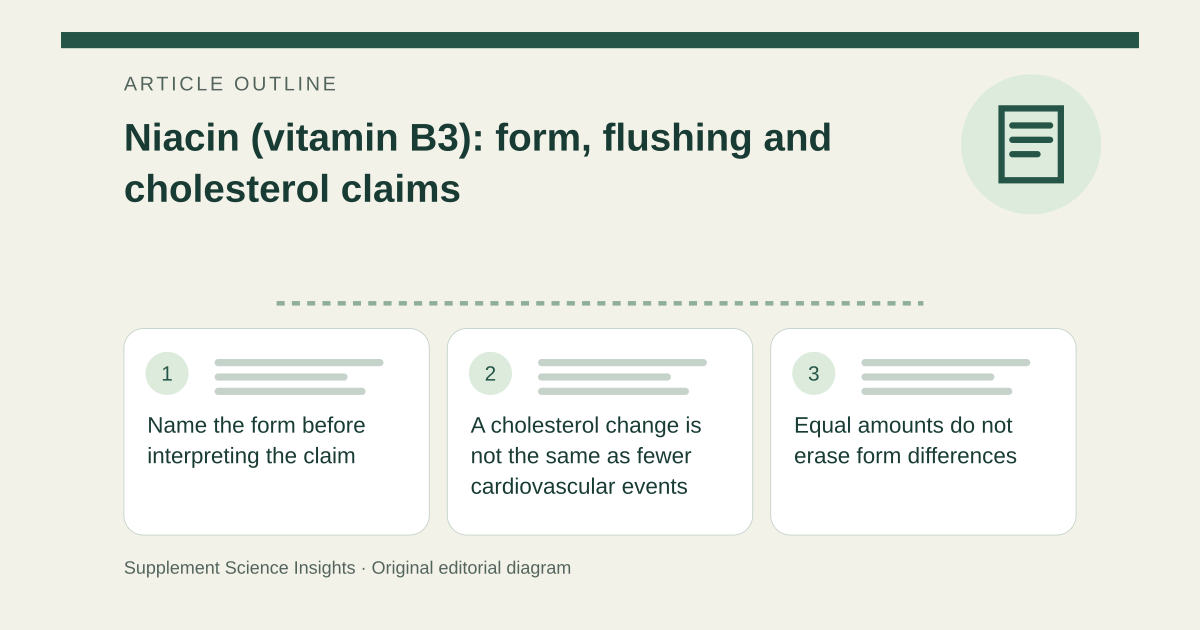
Name the form before interpreting the claim
Niacin is vitamin B3, a name covering nicotinic acid, nicotinamide and related compounds. Nicotinamide is also called niacinamide. The full ingredient name matters: a shared vitamin category does not establish the same effects or risks for every preparation. [1]
Keep the form and release description in your notes. Do not copy a finding about one preparation into a comparison row that names only “B3.” This page addresses oral supplements, not a comparison of topical skin products. [1]
A cholesterol change is not the same as fewer cardiovascular events
NIH’s summary distinguishes nicotinic acid’s effects on blood lipids from evidence about cardiovascular events. Improving a laboratory lipid measure does not by itself establish fewer heart attacks or strokes. High-dose use for lipid disorders is a medical treatment context requiring supervision. [1]
When reading a claim, retain background treatment and the comparator. A result for an added preparation in statin-treated participants is not a general answer for every person or every niacin product. Do not use this page to stop or replace prescribed lipid treatment. [1]
Equal amounts do not erase form differences
Two fictional labels each declare 20 mg niacin per serving. A specifies nicotinic acid; B specifies nicotinamide. The equal declared amounts can be recorded, but they do not demonstrate identical flushing effects or establish that either preparation treats a lipid disorder.
The comparison needs separate fields for amount, form, release description and intended claim. Mark a claim “not established by this label” when the only supporting information is the nutrient quantity. These invented entries are not a recommendation to use either product.
| Label | Niacin per serving | Named form |
|---|---|---|
| A | 20 mg | Nicotinic acid |
| B | 20 mg | Nicotinamide |
Less flushing does not mean an unrestricted safety profile
Nicotinic acid can cause flushing. Nicotinamide does not cause the same flushing response, but high supplemental intakes can still cause adverse effects. NIH describes liver toxicity and other serious risks with high-dose niacin preparations. [1]
The two forms have different adverse-effect profiles. A “no-flush” marketing description should not be interpreted as a personal safety clearance or proof of cardiovascular benefit. Bring the actual ingredient and medicine list to a clinician or pharmacist. [1]
Do not infer a treatment plan from a nutrient panel
The useful output of this comparison is an accurate record of what the label says and what its clinical claim would still need to establish. A percentage of Daily Value cannot substitute for a trial result, and a brand name cannot substitute for a formulation.
This is an educational article using NIH background, with independent review pending. It does not select a lipid-lowering regimen, give a titration schedule or comprehensively appraise current cardiovascular guidance. No retail product has been independently tested or endorsed.
Sources for this article
- NIH Office of Dietary Supplements — Niacin: Health Professional Fact Sheet
Source consulted: 2026-09-17. This is a reference resource, not a claim that we conducted the studies or tested a product.