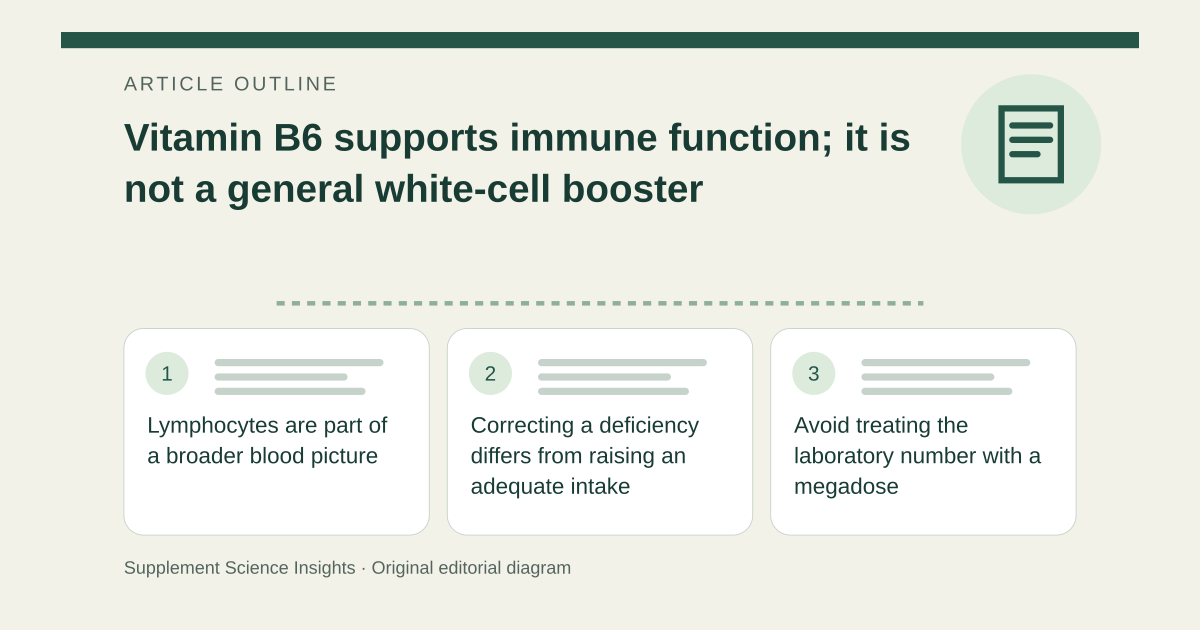
Lymphocytes are part of a broader blood picture
ODS describes B6 involvement in lymphocyte and interleukin-2 production. This is a statement about normal physiology. A total white-cell result and its different cell categories require interpretation in context; they do not, by themselves, identify a B6 deficiency or prescribe a supplement. [1]
Correcting a deficiency differs from raising an adequate intake
B6 deficiency can impair immune function, but supplementation beyond nutritional needs should not be assumed to raise useful immune activity. A clinician evaluating an abnormal blood count needs the history, medicines and other findings. The nutrient’s biological role alone cannot explain why the count changed. [1]
Avoid treating the laboratory number with a megadose
Imagine someone begins several B6-containing products after a low white-cell result. This adds exposure without establishing the cause, and excessive B6 can cause sensory neuropathy. Bring the full list to the clinician and follow the investigation of the blood result instead of substituting an unproven vitamin regimen. [1]
| Situation | Interpretation |
|---|---|
| Normal immune role | A physiological requirement |
| Low white-cell count | Needs clinical interpretation |
| Extra B6 | Not an established general treatment |
Sources for this article
- Vitamin B6 - Health Professional Fact Sheet
Source consulted: 2026-09-20. This is a reference resource, not a claim that we conducted the studies or tested a product.