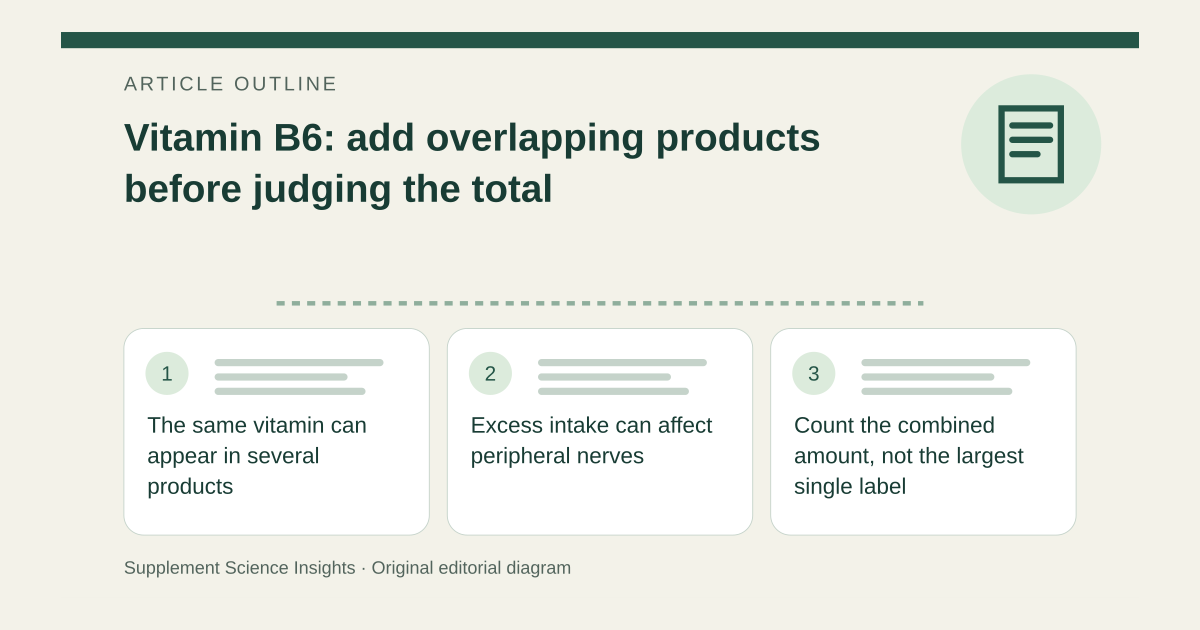
The same vitamin can appear in several products
Vitamin B6 supplements include preparations such as pyridoxine hydrochloride and pyridoxal 5′-phosphate. Record the declared B6 amount for every product, including a multivitamin, B-complex and combination supplement. [1]
The comparison should follow the nutrient across the whole list. Different front-label purposes do not make repeated B6 entries disappear. If a label does not disclose an individual amount, record that gap instead of treating it as zero. [1]
Excess intake can affect peripheral nerves
Excess supplemental vitamin B6 can cause peripheral neuropathy. EFSA used this adverse effect as the basis for its 2023 upper-limit assessment. “Water soluble” is therefore not a sufficient reason to dismiss long-term exposure or overlapping products. [1][2]
Report new tingling, burning or numbness and supplement use to a clinician. This page cannot distinguish a supplement effect from another cause or determine a personal safe dose. Keep the full label, duration of use and medicine list available for assessment. [1][2]
Count the combined amount, not the largest single label
Imagine daily use of three fictional servings: a multivitamin with 2 mg B6, a B-complex with 5 mg and a combination product with 4 mg. Their supplemental total is 11 mg, before food or any other source is counted.
This calculation is an inventory, not a safety clearance. It does not establish that 11 mg is appropriate, that the declared amounts were laboratory verified or that longer use has no risk. Check serving frequency and units before adding the entries.
| Example product | B6 per fictional daily use |
|---|---|
| Multivitamin | 2 mg |
| B-complex | 5 mg |
| Combination supplement | 4 mg |
| Supplement total; food excluded | 11 mg |
Upper limits need an authority, date and population
NIH reports the U.S. adult upper limit of 100 mg/day and also notes EFSA’s 2023 adult upper limit of 12 mg/day. EFSA’s value includes pregnant and lactating adults. These are different assessments, not interchangeable numbers to select according to preference. [1][2]
An upper limit is not an intake target or a guarantee for an individual. Record which assessment you are discussing and which sources of intake it covers. The worked example does not compare an individual’s complete intake with either value. [1][2]
Prepare an exposure record rather than a diagnosis
Use one row per product with the exact B6 form, amount per serving, servings actually used, start date and reason for use. Include entries whose quantity is unknown. That makes the uncertainty visible when the list is reviewed.
This article references the government summary and the EFSA assessment; it does not independently reconcile every national guideline or evaluate all underlying reports. Qualified scientific review is pending. No product, self-treatment schedule or medication change is recommended.
Sources for this article
- NIH Office of Dietary Supplements — Vitamin B6: Health Professional Fact Sheet
Source consulted: 2026-09-17. This is a reference resource, not a claim that we conducted the studies or tested a product. - EFSA (2023) — Scientific opinion on the tolerable upper intake level for vitamin B6
Source consulted: 2026-09-17. This is a reference resource, not a claim that we conducted the studies or tested a product.