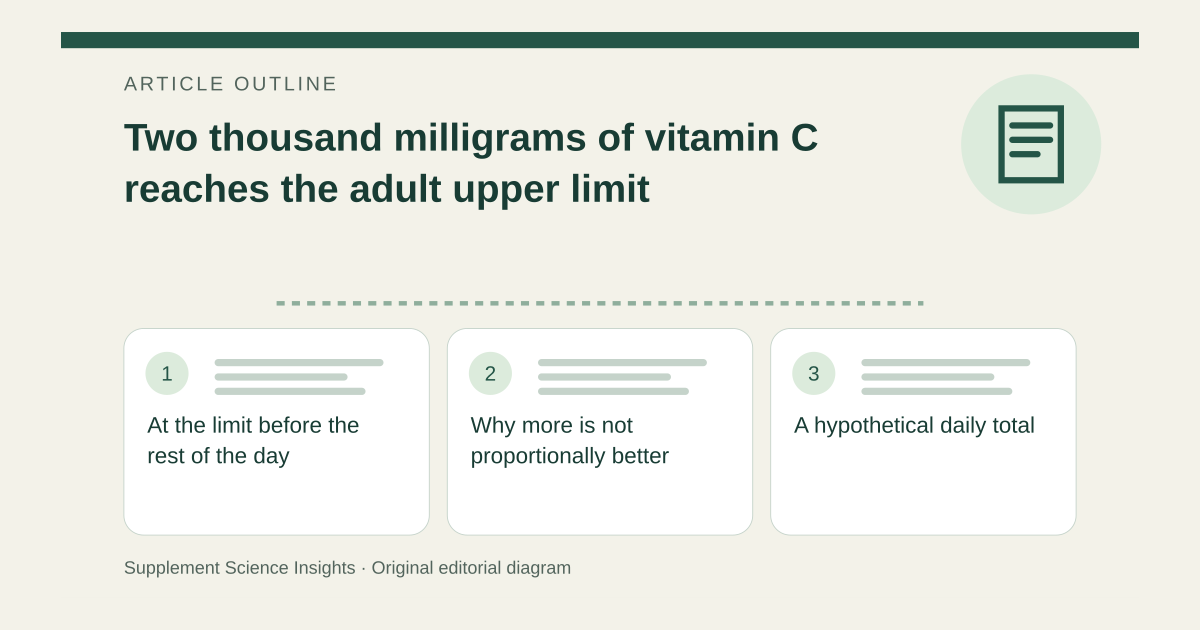
At the limit before the rest of the day
For adults aged 19 and older, the U.S. tolerable upper intake level for vitamin C is 2,000 mg daily from food and supplements combined. A supplement providing that amount already uses the entire limit. Eating vitamin-C-containing food or taking another product then raises the total above it. A one-time intake is not automatically a diagnosis of poisoning, but this is not a routine intake target. [1]
Why more is not proportionally better
The body regulates vitamin C concentrations, and the fraction absorbed falls at high oral doses. Unabsorbed vitamin C can cause gastrointestinal symptoms such as diarrhea and cramping. The upper limit describes a population risk boundary, not a guaranteed symptom threshold for an individual. Kidney disease or iron-overload disorders require additional care in assessing high-dose use. [1]
A hypothetical daily total
A 2,000 mg supplement plus 100 mg from food totals 2,100 mg. The arithmetic shows why a bottle strength and a whole-day intake are different quantities. If a clinician has recommended a specific treatment, discuss that regimen and monitoring rather than using the upper-limit number as a substitute for the treatment plan. [1]
| Hypothetical source | Vitamin C |
|---|---|
| Supplement | 2,000 mg |
| Food contribution | 100 mg |
| Combined total | 2,100 mg |
Sources for this article
- Vitamin C - Health Professional Fact Sheet
Source consulted: 2026-09-20. This is a reference resource, not a claim that we conducted the studies or tested a product.