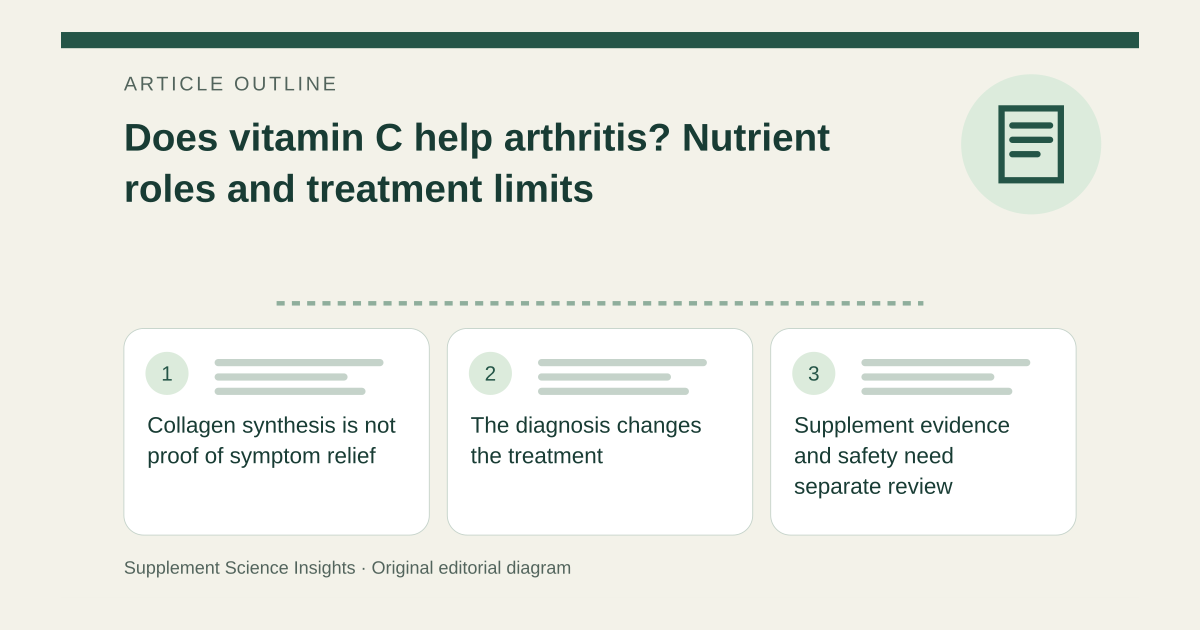
Collagen synthesis is not proof of symptom relief
NIH explains that vitamin C is necessary for collagen formation and that severe deficiency causes scurvy. Correcting deficiency is different from demonstrating improvement in arthritis in someone with adequate intake. A plausible tissue mechanism alone does not supply an effective arthritis dose. [1]
The diagnosis changes the treatment
NCCIH distinguishes rheumatoid arthritis, an autoimmune disease, from osteoarthritis. Early rheumatoid-arthritis treatment can help prevent permanent damage, and disease-modifying medicines have a different purpose from supplements. Do not postpone that care while testing vitamin C. [2]
Supplement evidence and safety need separate review
The inspected NCCIH guidance does not establish vitamin C as a rheumatoid-arthritis treatment. NIH describes gastrointestinal adverse effects from high intake and considerations for kidney stones and iron overload. An essential nutrient is not risk-free at every supplemental dose. [2][1]
Ask what success would mean
Imagine a person with swollen joints takes extra vitamin C because cartilage contains collagen. The next step is to identify the cause of swelling and appropriate treatment. Nutritional adequacy can be addressed alongside pain, function and disease activity rather than assumed to control them. [2][1]
| Question | Relevant distinction |
|---|---|
| Is intake inadequate? | Nutritional correction |
| What type of arthritis? | Different disease mechanisms and treatments |
| Does a supplement relieve symptoms? | Requires clinical outcome evidence |
| Will it prevent joint damage? | Do not substitute for proven disease care |
Sources for this article
- Vitamin C - Health Professional Fact Sheet
Source consulted: 2026-09-21. This is a reference resource, not a claim that we conducted the studies or tested a product. - Rheumatoid Arthritis: In Depth | NCCIH
Source consulted: 2026-09-21. This is a reference resource, not a claim that we conducted the studies or tested a product.