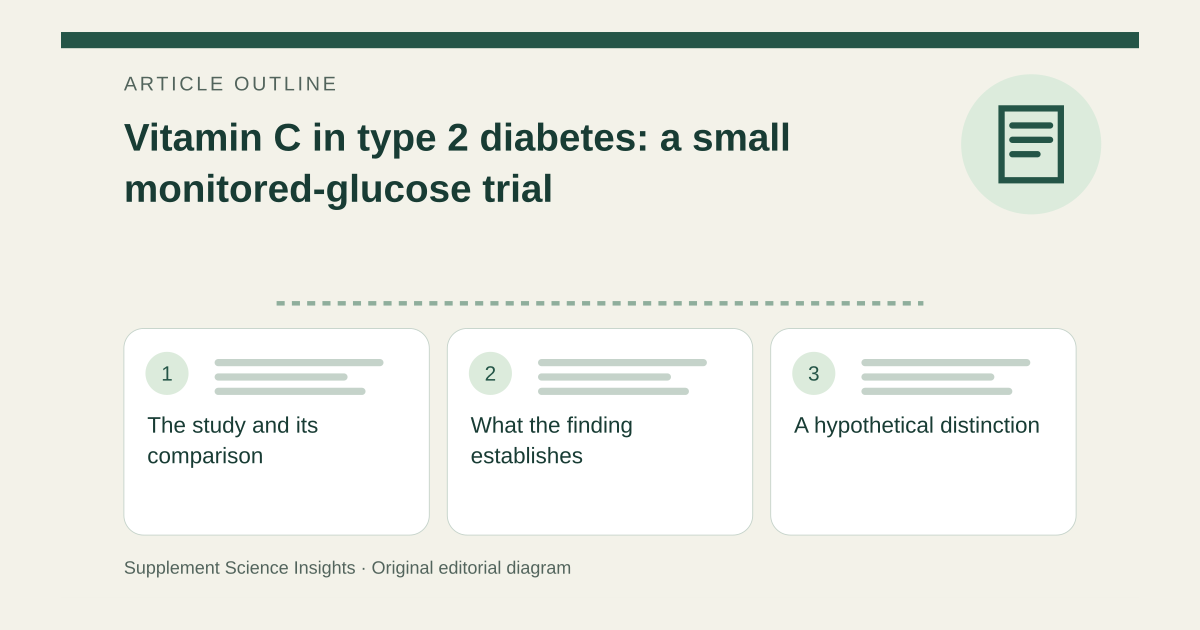
The study and its comparison
Thirty-one adults with type 2 diabetes entered a randomized crossover trial of vitamin C and placebo over four-month supplementation periods. Continuous glucose monitoring covered standardized meals over forty-eight hours before and after treatment. [1]
Post-meal glucose exposure, time spent with high glucose and average daily glucose favored vitamin C. Blood pressure also fell compared with placebo. [1]
What the finding establishes
The small, mostly male sample and brief monitoring windows limit generalization. These results do not demonstrate fewer diabetic complications or justify replacing medication. A measured glucose outcome should not be automatically restated as an HbA1c benefit. Funding and conflicts were not established from the abstract. The research used one gram daily, not every preparation or amount. [1]
A hypothetical distinction
Imagine two days of monitored glucose improve after an intervention. Long-term complications remain a different research question.
| Detail | Interpretation |
|---|---|
| Measured outcome | Keep the endpoint specific |
| Study preparation | Not every retail product |
| Remaining uncertainty | Not resolved by a mechanism |
Sources for this article
- Ascorbic acid supplementation improves postprandial glycaemic control and blood pressure in individuals with type 2 diabetes: Findings of a randomized cross-over trial.
Source consulted: 2026-09-19. This is a reference resource, not a claim that we conducted the studies or tested a product.