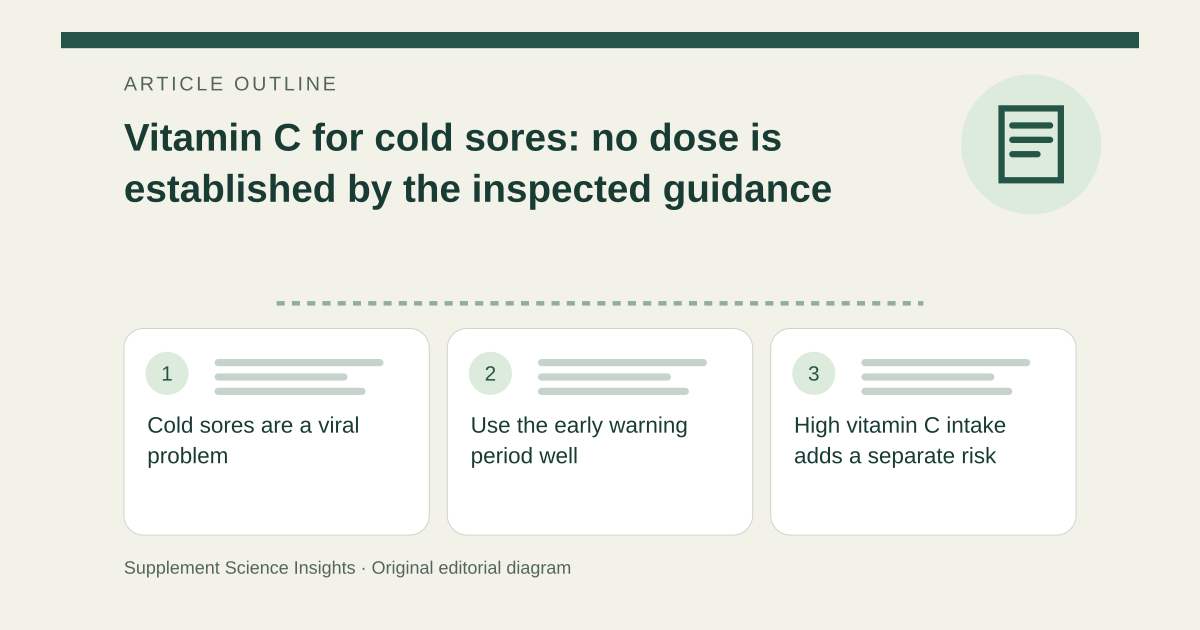
Cold sores are a viral problem
Cold sores are caused by herpes simplex, which can reactivate after the initial infection. They are contagious from early tingling until healing is complete. A nutrient’s role in normal immune function does not establish a dose that clears the virus or prevents future outbreaks. [1][2]
Use the early warning period well
NHS advises starting antiviral cream at the first familiar tingling rather than waiting for a blister. A pharmacist can advise on appropriate products. A clinician may prescribe antiviral tablets for large, painful or recurrent outbreaks. [1]
High vitamin C intake adds a separate risk
Large supplemental amounts can cause diarrhea, nausea or cramps. The inspected guidance does not justify escalating vitamin C to treat a cold sore. If your diet is inadequate, addressing that nutritional gap is a different goal from shortening an outbreak. [2]
Know when the sore needs assessment
Imagine a presumed cold sore has not started healing after ten days. NHS recommends assessment rather than continuing to add supplements. Seek advice sooner for severe symptoms or immune suppression, and never kiss a newborn while you have a cold sore. [1]
| Situation | Relevant next step |
|---|---|
| Early familiar tingling | Ask about prompt antiviral treatment |
| High-dose vitamin C | No established cold-sore dose here |
| Not healing after ten days | Arrange clinical assessment |
Sources for this article
- Cold sores - NHS
Source consulted: 2026-09-20. This is a reference resource, not a claim that we conducted the studies or tested a product. - Vitamin C - Health Professional Fact Sheet
Source consulted: 2026-09-20. This is a reference resource, not a claim that we conducted the studies or tested a product.