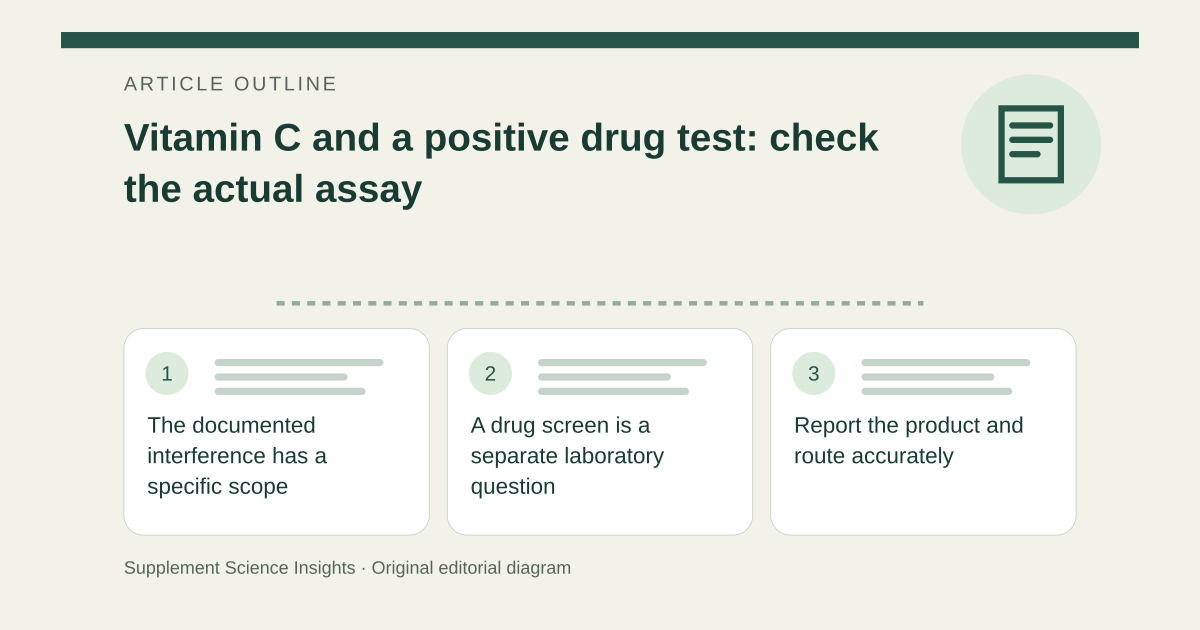
The documented interference has a specific scope
The prescribing label for intravenous ASCOR describes interference with oxidation-reduction laboratory methods, including some glucose, nitrite and bilirubin testing. It mentions falsely low or negative findings in affected tests. This is not evidence that an ordinary oral vitamin C tablet causes a positive drug screen. [1]
A drug screen is a separate laboratory question
ARUP advises treating immunoassay results as presumptive and confirming unexpected findings with a definitive method. Ask which substance was reported and what method was used; do not assign the result to vitamin C from a general interference warning. [2]
Report the product and route accurately
Imagine receiving an unexpected result after vitamin C use. Give the testing clinician the product, dose, route and timing, including any infusion, and request assay-specific review. Do not take extra vitamin C or change the specimen to try to alter a result. Follow the laboratory’s preparation instructions. [3][4]
| Situation | Next interpretation step |
|---|---|
| IV vitaminC warning | Limited to specified test chemistry |
| Unexpected screen | Seek assay review and confirmation |
| Oral supplement | Disclose exact dose and timing |
Sources for this article
- DailyMed - ASCOR- ascorbic acid injection
Source consulted: 2026-09-20. This is a reference resource, not a claim that we conducted the studies or tested a product. - Drug Testing | Choose the Right Test
Source consulted: 2026-09-20. This is a reference resource, not a claim that we conducted the studies or tested a product. - How to Prepare for a Lab Test: MedlinePlus Medical Test
Source consulted: 2026-09-20. This is a reference resource, not a claim that we conducted the studies or tested a product. - Vitamin C - Health Professional Fact Sheet
Source consulted: 2026-09-20. This is a reference resource, not a claim that we conducted the studies or tested a product.