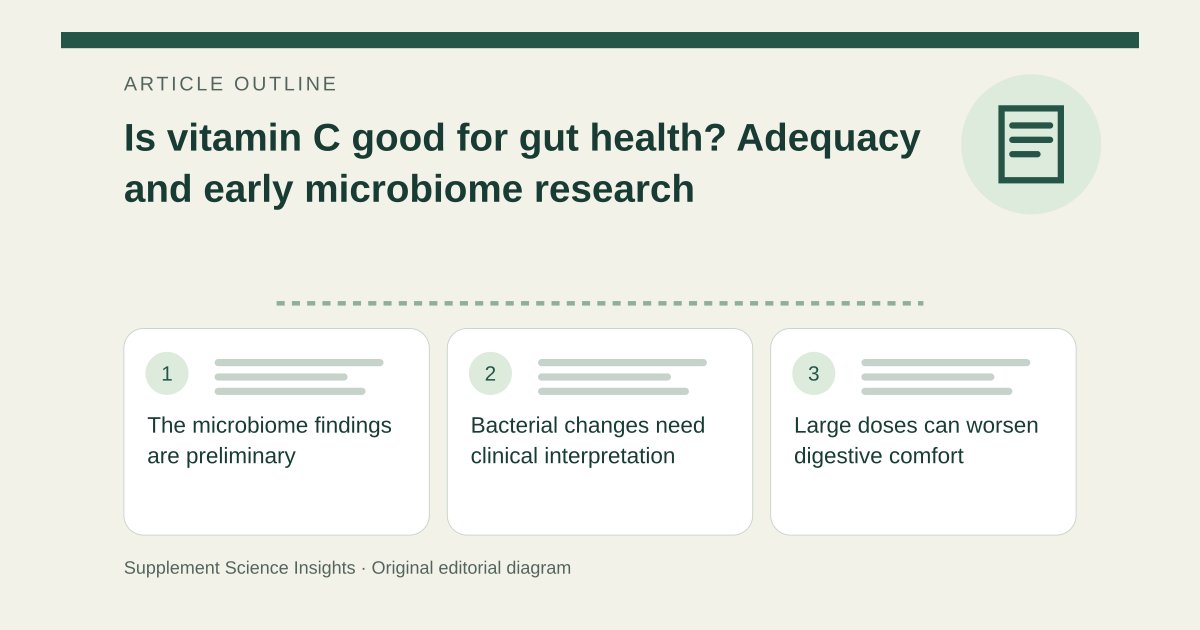
The microbiome findings are preliminary
A 2022 narrative review describes vitamin-related changes in microbial populations and possible intestinal immune mechanisms. It combines different research settings and vitamins. Its discussion does not establish one vitamin C dose that reliably improves gut health for everyone. [1]
Bacterial changes need clinical interpretation
A study reporting more or fewer of certain bacteria does not by itself show less pain, better function or control of inflammatory bowel disease. Effects can depend on diet, baseline health and the intervention. The review itself describes important gaps in understanding vitamin and microbiota interactions. [1]
Large doses can worsen digestive comfort
NIH lists diarrhea, nausea and abdominal cramps with excessive vitamin C intake. Lower absorption at high oral doses helps explain why the intestine can be affected. A bowel response is not proof of beneficial cleansing or microbiome repair. [2]
Choose a specific nutritional or clinical goal
Imagine someone with bloating increases vitamin C to change their microbiome, then develops diarrhea. That is not evidence of a necessary adjustment phase. Review the dose and persistent symptoms while addressing actual nutritional needs and any diagnosed condition. [2][1]
| Evidence or symptom | Limit |
|---|---|
| Change in bacterial abundance | Not automatically a patient benefit |
| Normal vitamin requirement | Does not define a treatment dose |
| Diarrhea after high intake | Possible adverse effect |
| Persistent digestive symptoms | Need cause-specific assessment |
Sources for this article
- Vitamin–Microbiota Crosstalk in Intestinal Inflammation and Carcinogenesis - PMC
Source consulted: 2026-09-21. This is a reference resource, not a claim that we conducted the studies or tested a product. - Vitamin C - Health Professional Fact Sheet
Source consulted: 2026-09-21. This is a reference resource, not a claim that we conducted the studies or tested a product.