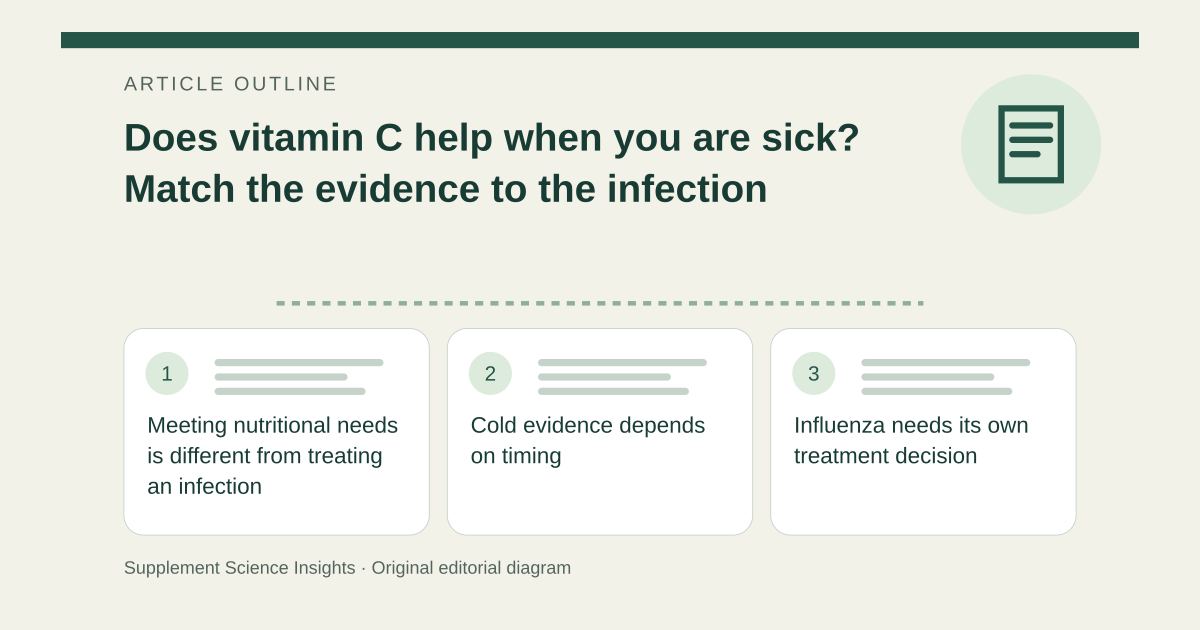
Meeting nutritional needs is different from treating an infection
ODS describes vitamin C as an essential nutrient with a role in immune function. Correcting inadequate intake matters, but adding more to an already adequate diet does not establish that a virus or bacterium will be cleared faster. Identify the illness rather than treating the phrase immune support as a diagnosis. [1]
Cold evidence depends on timing
According to the ODS synthesis, regular supplementation does not generally prevent colds in the general population, although it can modestly shorten them. Starting only after symptoms begin has not shown the same benefit. Findings in unusually intense exercise or cold exposure do not describe everyone. These distinctions explain why a prevention headline may not answer whether a new sick-day tablet helps. [1]
Influenza needs its own treatment decision
A cold result does not establish a vitamin C dose that shortens influenza. CDC describes prescription antiviral medicines for flu, with early treatment particularly important for people at higher risk or with severe illness. They work best when started promptly, usually within two days, though later treatment may still help selected patients. Do not delay a clinical call while testing a supplement. [2]
Other infections cannot be grouped into one vitamin claim
Antibiotics do not treat flu viruses, while a bacterial illness may require a different assessment. Vitamin C is not a substitute for that decision. Seek care for worsening illness or concerning symptoms; the NHS cold guidance specifically flags shortness of breath, chest pain and prolonged or worsening symptoms for assessment. [2][3]
More is not a reliable recovery shortcut
Large oral amounts can cause diarrhea, nausea and cramps. Imagine someone with fever adds several vitamin C products and develops diarrhea: that is not proof of detoxification or a successful immune response. Count the combined intake and discuss the illness and products with a clinician when needed. [1]
| Question | Relevant evidence |
|---|---|
| Prevent ordinary colds? | Regular use does not generally prevent them |
| Start C after symptoms? | No consistent cold-treatment benefit in ODS summary |
| Possible influenza? | Consider prompt clinical antiviral assessment |
Sources for this article
- Vitamin C - Health Professional Fact Sheet
Source consulted: 2026-09-21. This is a reference resource, not a claim that we conducted the studies or tested a product. - Treatment of Flu | Influenza (Flu) | CDC
Source consulted: 2026-09-21. This is a reference resource, not a claim that we conducted the studies or tested a product. - Common cold - NHS
Source consulted: 2026-09-21. This is a reference resource, not a claim that we conducted the studies or tested a product.