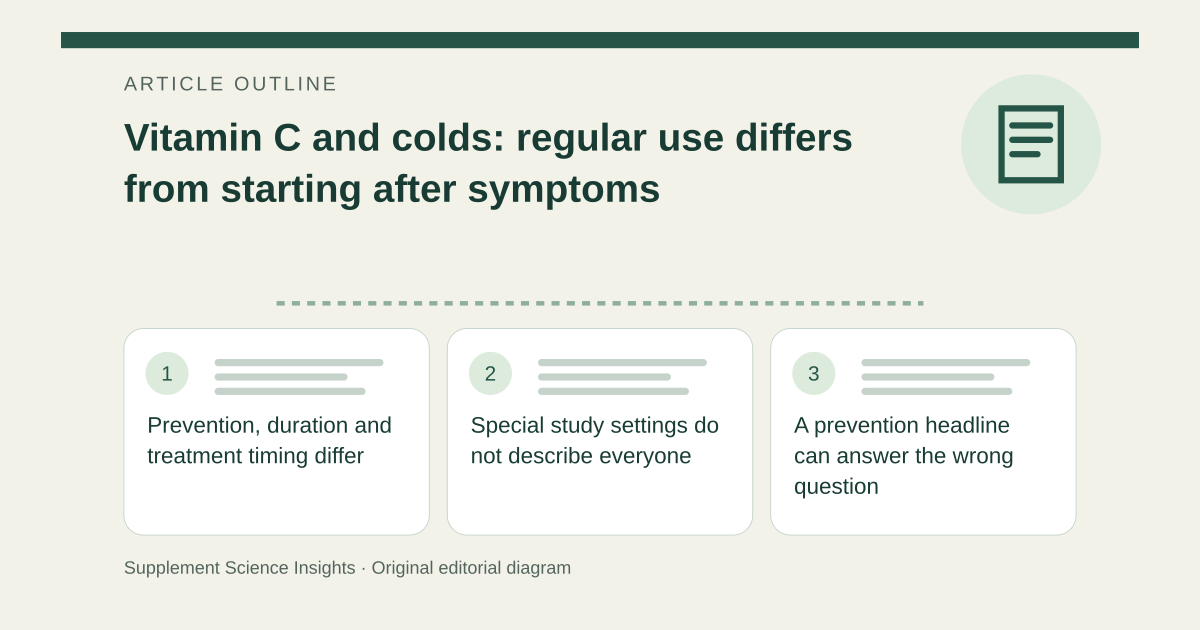
Prevention, duration and treatment timing differ
ODS reports that regular vitamin C supplementation does not appear to reduce the chance of getting a cold in the general population. It may modestly reduce duration and symptom severity. Those are different outcomes, so “prevents colds” overstates the general finding. [1]
Starting vitamin C after a cold begins does not appear to improve duration or severity in the evidence summarized by ODS. Results from ongoing use should not be transferred automatically to a product taken only on the first sick day. [1]
Special study settings do not describe everyone
Some studies involving extreme physical exertion or cold environments have found a reduction in cold incidence with regular supplementation. Marathon runners, skiers or people under unusual physical stress are not interchangeable with the general population. [1]
The preparation, timing, baseline status and outcome need to remain attached to the result. This article reports an authoritative synthesis rather than selecting one favorable study as a universal rule. [1]
A prevention headline can answer the wrong question
Imagine someone with a new sore throat reads about people who had taken vitamin C regularly before illness. The question they need answered is whether beginning it now helps, which differs from the study’s preventive schedule.
Even an average reduction in duration would not guarantee a fixed number of hours saved in one person. Natural variation in colds makes personal before-and-after impressions unreliable.
| Detail | Meaning |
|---|---|
| Regular use before illness | Different from treatment after onset |
| Fewer colds | Different from shorter colds |
| Extreme exertion group | Not a guarantee for ordinary daily life |
An uncertain benefit does not justify escalating intake
High vitamin C amounts can cause nausea, cramps and diarrhea. The adult upper intake limit is a safety reference rather than a cold-treatment dose, and children have lower limits. [1]
Consider existing products and medical conditions before adding another preparation. This page concerns common-cold evidence; it does not extend those findings to influenza, pneumonia or other causes of respiratory symptoms. [1]
Sources for this article
- NIH ODS — Vitamin C: Health Professional Fact Sheet
Source consulted: 2026-09-17. This is a reference resource, not a claim that we conducted the studies or tested a product.