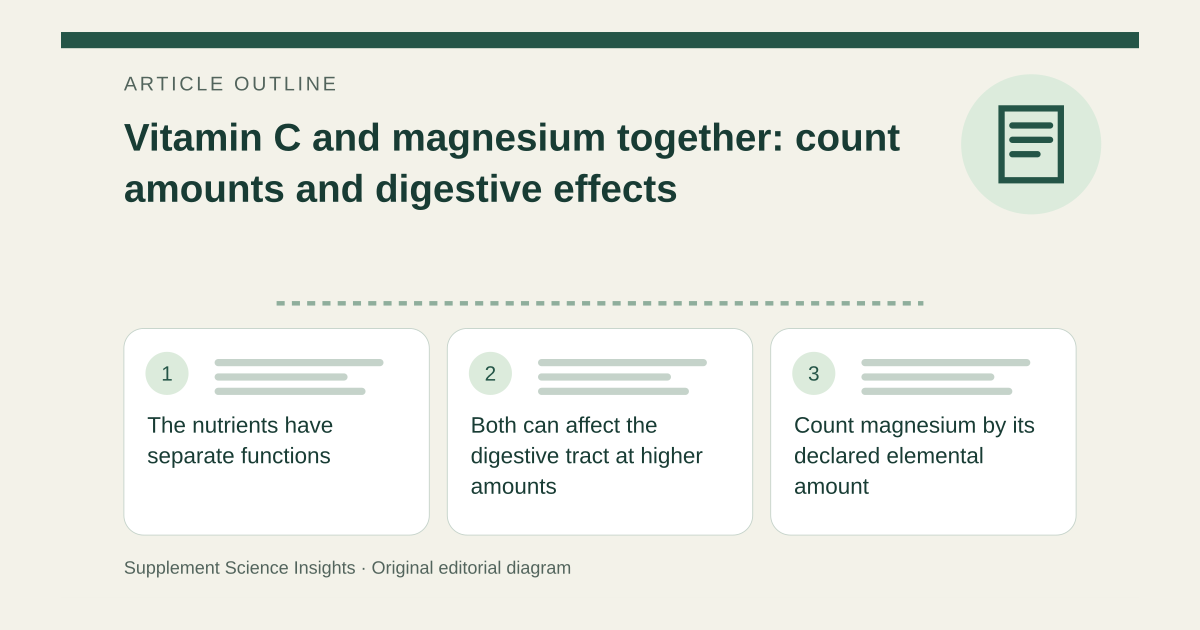
The nutrients have separate functions
Vitamin C is involved in collagen synthesis and other processes, while magnesium participates in many enzyme systems. These normal roles do not establish that combining extra amounts provides an additional benefit. Start with why each is being used and whether food and existing products already meet that purpose. [1][2]
Both can affect the digestive tract at higher amounts
High vitamin C intake can cause diarrhea, nausea and abdominal cramps. Magnesium supplements can also cause diarrhea and cramping. Combining products can complicate the explanation for new symptoms even without a documented direct interaction between the two nutrients. Persistent problems should trigger a review of amounts and formulations rather than automatic escalation. [1][2]
Count magnesium by its declared elemental amount
Imagine one product supplies 200 mg magnesium and another supplies 200 mg. The total is 400 mg from supplements. This exceeds the U.S. adult supplemental magnesium upper limit of 350 mg per day; the limit excludes food magnesium and is not an individualized toxicity threshold. Impaired kidney function and interacting medicines require additional attention. [2]
| Situation | Interpretation |
|---|---|
| Two 200 mg magnesium products | 400 mg supplemental magnesium |
| Vitamin C plus magnesium | Check both digestive tolerability profiles |
| Kidney impairment | Needs individual advice |
Sources for this article
- Vitamin C - Health Professional Fact Sheet
Source consulted: 2026-09-20. This is a reference resource, not a claim that we conducted the studies or tested a product. - Magnesium - Health Professional Fact Sheet
Source consulted: 2026-09-20. This is a reference resource, not a claim that we conducted the studies or tested a product.