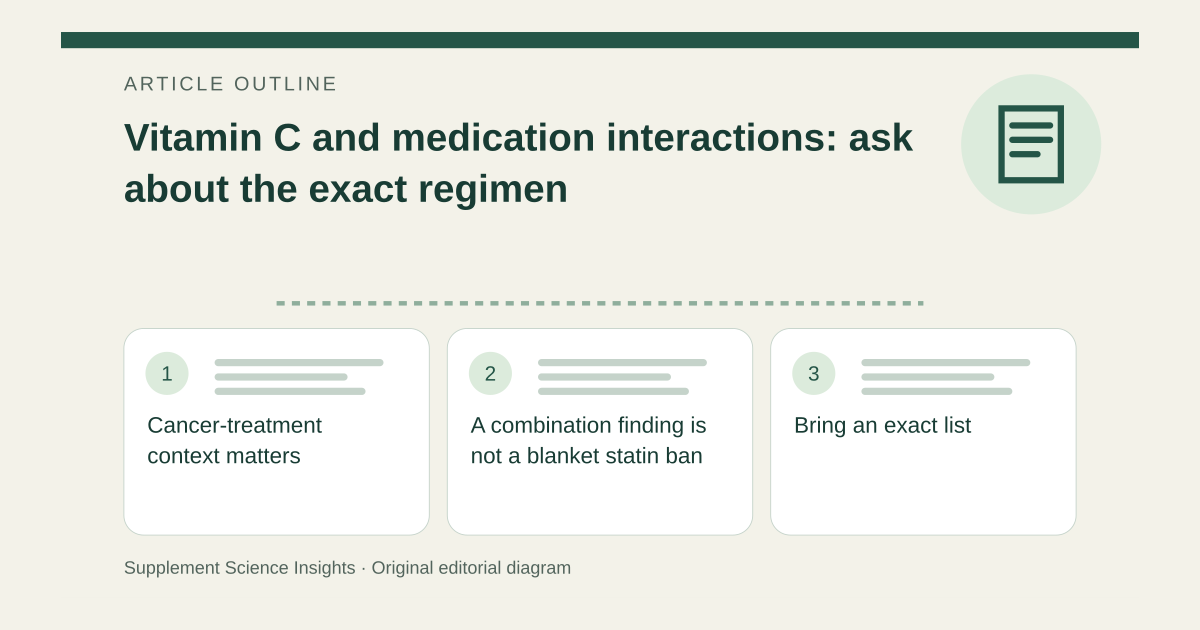
Cancer-treatment context matters
NIH ODS describes uncertainty and controversy about vitamin C and other antioxidants during chemotherapy or radiation. It advises discussing antioxidant supplements with the oncology team, particularly at high doses. Laboratory mechanisms or claims of protecting normal cells do not establish that a self-selected supplement is safe with an individual cancer regimen. [1]
A combination finding is not a blanket statin ban
ODS reports that vitamin C combined with other antioxidants may reduce theHDL response to niacin plus simvastatin. It is unknown whether the same effect occurs with other lipid-lowering regimens. That evidence should not be rewritten as proof that all food vitamin C or every vitamin C dose conflicts with every statin. [1]
Bring an exact list
Imagine someone receiving cancer treatment wants to add a multi-antioxidant powder. The care team needs the complete ingredients, amounts, frequency and treatment regimen before assessing it. A generic safe-with-medications claim is inadequate. Do not stop prescribed treatment independently, and do not assume this short list covers every possible interaction. [1]
| Hypothetical context | Question for the treating team |
|---|---|
| Chemotherapy or radiation | Whether the exact supplement fits the regimen |
| Niacin/simvastatin plus antioxidant blend | Relevance of combination evidence |
| Ordinary food intake | Different exposure from a high-dose supplement |
Sources for this article
- Vitamin C - Health Professional Fact Sheet
Source consulted: 2026-09-20. This is a reference resource, not a claim that we conducted the studies or tested a product.