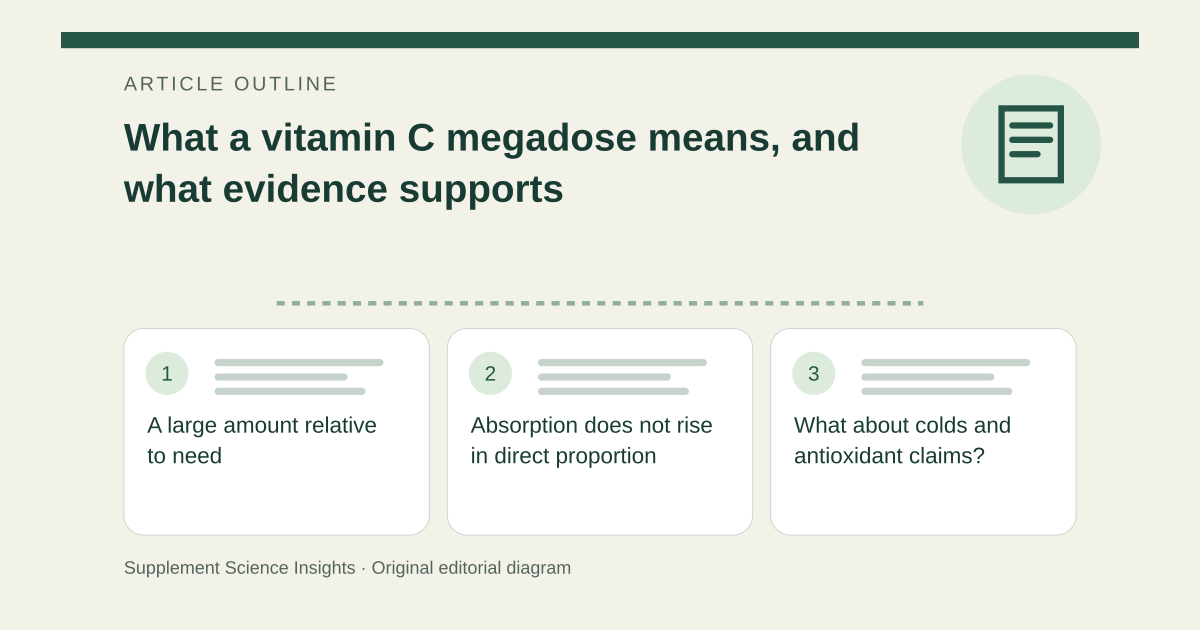
A large amount relative to need
Megadose is an informal term for taking a nutrient in amounts substantially above ordinary requirements. It is not a standardized vitamin C product category. A useful discussion therefore states the actual milligrams and frequency instead of relying on the word alone. [1]
NIH lists recommended daily vitamin C amounts of 75 mg for most adult women and 90 mg for most adult men, with different requirements for pregnancy, breastfeeding and smoking. These requirement figures are not the same as the maximum level used to assess risk. [1]
Absorption does not rise in direct proportion
Vitamin C absorption is regulated. NIH reports that the proportion absorbed falls at high oral intakes, with less than half absorbed at amounts above 1 g per day. Unabsorbed material remains in the gut, while the body also regulates vitamin C through urinary excretion. [1]
This means that ten times the swallowed amount does not reliably produce ten times the useful biological effect. Oral supplementation is also not interchangeable with intravenous treatment, which bypasses intestinal absorption and belongs to a different clinical setting. [1]
What about colds and antioxidant claims?
In the general population, taking vitamin C regularly does not appear to reduce the chance of catching a cold, although it can modestly shorten cold duration. NIH reports that starting vitamin C after symptoms begin has not shown a consistent benefit for duration or severity. Findings in special groups should not be generalized to everyone. [1]
Vitamin C has normal antioxidant and enzyme-supporting functions, but those functions do not prove that megadosing prevents disease. Evidence must address the particular outcome, population and intervention rather than substituting a laboratory antioxidant measurement for a clinical result. [1]
Potential harms and the upper level
The adult tolerable upper intake level is 2,000 mg per day from all sources. It is not a recommended target, and some people develop gastrointestinal symptoms at lower amounts. Diarrhea, nausea and abdominal cramps can occur with high oral intakes. [1]
People with conditions affecting kidney health or iron handling need particular care. NIH notes that high chronic vitamin C intake can worsen iron overload in hereditary hemochromatosis. A water-soluble vitamin is not automatically harmless at any amount. [1]
A hypothetical daily total
Suppose someone takes two products that each supply 1,000 mg vitamin C per day. Together they provide 2,000 mg before counting food or any other supplement. That reaches the adult upper level in this example; it does not establish a benefit or a safe personal plan. [1]
| Source | Hypothetical daily vitamin C |
|---|---|
| Product A | 1,000 mg |
| Product B | 1,000 mg |
| Combined supplements | 2,000 mg, before food |
Sources for this article
- Vitamin C - Health Professional Fact Sheet
Source consulted: 2026-09-20. This is a reference resource, not a claim that we conducted the studies or tested a product.