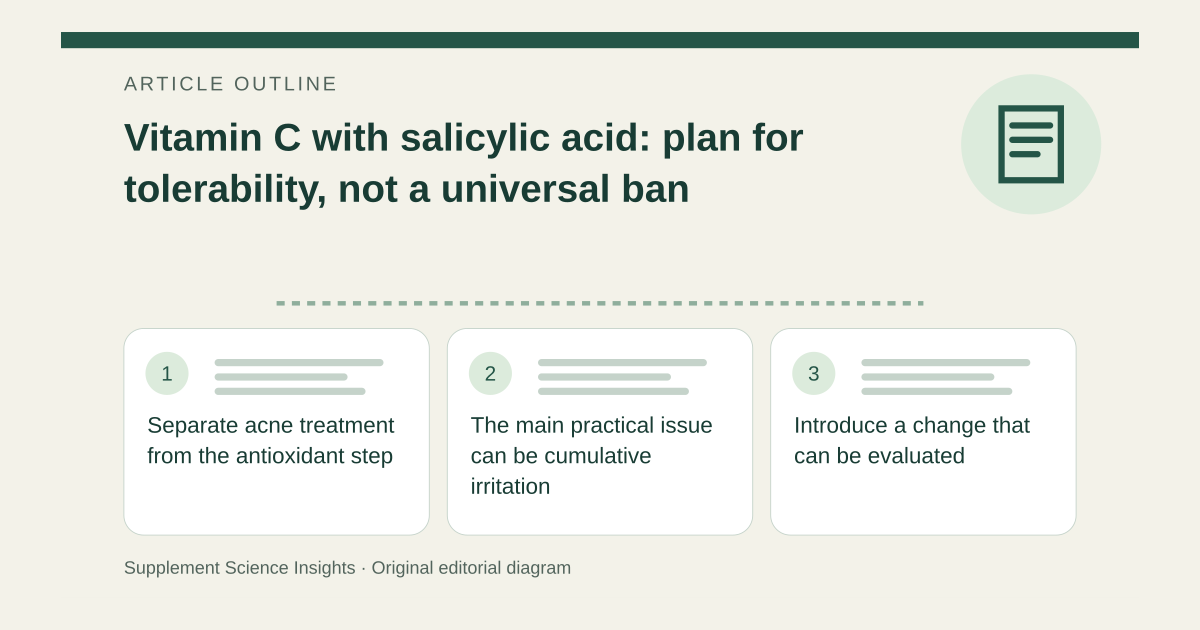
Separate acne treatment from the antioxidant step
AAD describes salicylic acid as an exfoliating acne ingredient. Vitamin C has a different research base and is not a substitute for every acne treatment. Decide what each product is intended to accomplish before adding both simply because they are popular skin-care ingredients. [1][2]
The main practical issue can be cumulative irritation
Concentration, frequency and other active products all matter. AAD cautions against duplicating active ingredients across products because of irritation, especially with acid-containing routines. A cleanser containing salicylic acid and a leave-on acid product are not identical exposures, so one rigid layering schedule cannot cover every combination. [3]
Introduce a change that can be evaluated
Imagine a person already tolerates an acne routine and wants to add vitamin C. Review the existing actives, test the new product and introduce it cautiously according to directions. If redness or stinging develops, do not keep adding products to force adaptation. A clinician can help adjust a prescribed regimen. [4][3]
| Question | Practical interpretation |
|---|---|
| Salicylic acid | Acne and exfoliation purpose |
| Vitamin C | Separate optional skin-care purpose |
| Several irritating products | Review cumulative exposure |
Sources for this article
- Acne: Diagnosis and treatment
Source consulted: 2026-09-20. This is a reference resource, not a claim that we conducted the studies or tested a product. - The Roles of Vitamin C in Skin Health - PMC
Source consulted: 2026-09-20. This is a reference resource, not a claim that we conducted the studies or tested a product. - Do facial masks work, and should I add one to my skin care routine?
Source consulted: 2026-09-20. This is a reference resource, not a claim that we conducted the studies or tested a product. - How to test skin care products
Source consulted: 2026-09-20. This is a reference resource, not a claim that we conducted the studies or tested a product.