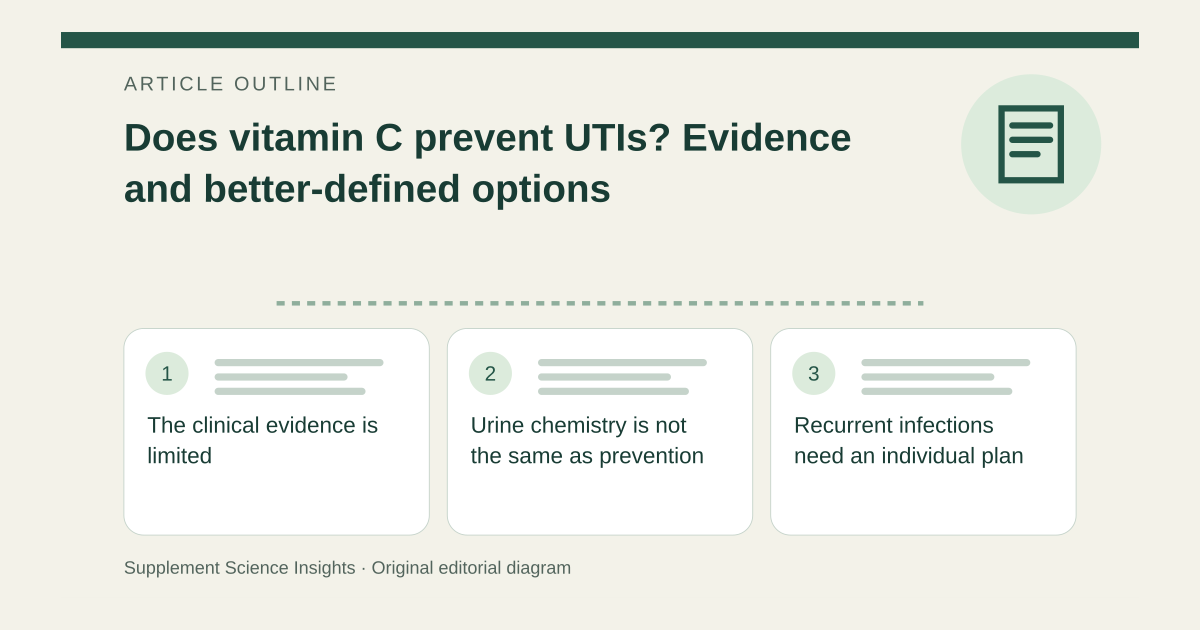
The clinical evidence is limited
A 2023 review found too little robust vitamin C evidence to strongly support UTI prevention. Few studies involved older adults, so the review included broader adult populations. Limited reported harms in small studies do not establish either reliable efficacy or safety for every person. [1]
Urine chemistry is not the same as prevention
A rationale involving urine acidity cannot by itself show fewer infections. NICE discusses methenamine hippurate as a particular preventive medicine for suitable patients and warns against alkalinizing UTI sachets during its use. That does not make self-prescribed vitamin C an equivalent medicine or an automatic required add-on. [2]
Recurrent infections need an individual plan
NICE describes behavioral measures and, when suitable, options such as vaginal estrogen, trigger-related antibiotic prophylaxis or other preventive treatment. Choice depends on the patient and prior episodes. Do not replace a prescribed prevention plan with vitamin C on the basis of an acidification claim. [2]
Treat new symptoms as a possible infection
NHS describes prompt assessment for concerning UTI symptoms or higher-risk circumstances, including pregnancy and possible kidney infection. Imagine burning urination with fever or back pain: escalating vitamin C would delay the relevant evaluation. High intake can also cause digestive symptoms and may be unsuitable with certain kidney problems. [3][4]
| Situation | Appropriate focus |
|---|---|
| Repeated infections | Individual prevention plan |
| Urine-acidity claim | Needs clinical outcome evidence |
| Methenamine prescribed | Follow medicine-specific instructions |
| New fever, back pain or urinary symptoms | Timely clinical assessment |
Sources for this article
- Literature Review of Ascorbic Acid, Cranberry, and D-mannose for Urinary Tract Infection Prophylaxis in Older People.
Source consulted: 2026-09-21. This is a reference resource, not a claim that we conducted the studies or tested a product. - Recommendations | Urinary tract infection (recurrent): antimicrobial prescribing | Guidance | NICE
Source consulted: 2026-09-21. This is a reference resource, not a claim that we conducted the studies or tested a product. - Urinary tract infections (UTIs) - NHS
Source consulted: 2026-09-21. This is a reference resource, not a claim that we conducted the studies or tested a product. - Vitamin C - Health Professional Fact Sheet
Source consulted: 2026-09-21. This is a reference resource, not a claim that we conducted the studies or tested a product.