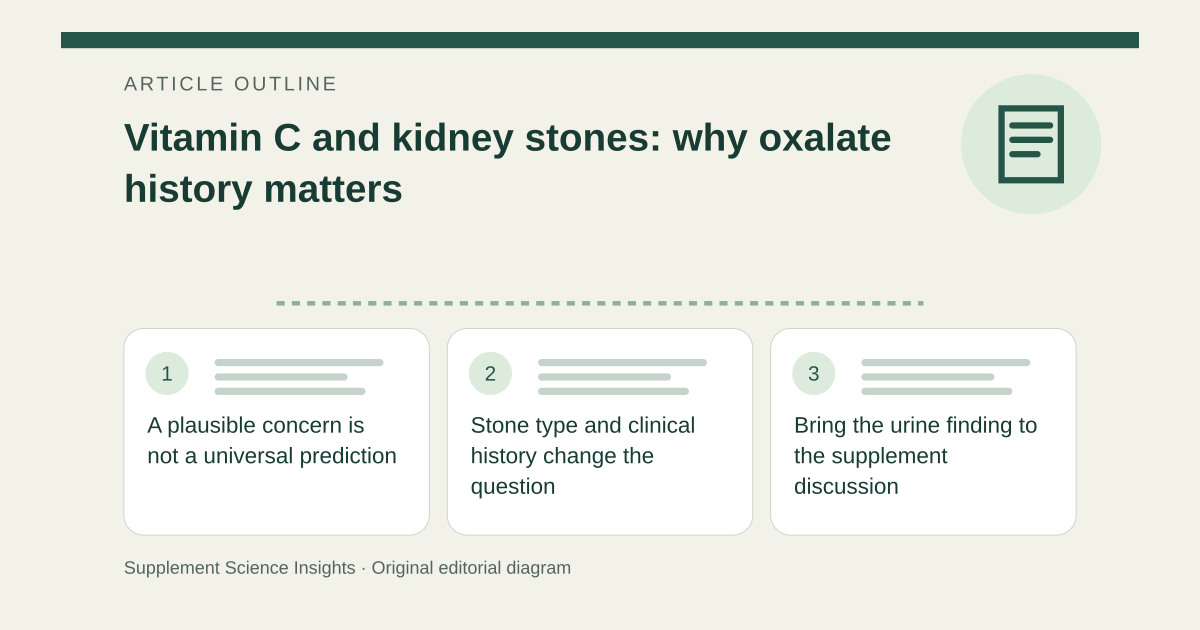
A plausible concern is not a universal prediction
ODS notes that high vitamin C intake has the potential to increase urinary oxalate and uric acid, which could contribute to kidney-stone formation. That mechanism does not establish that every person taking vitamin C will develop a stone. [1]
Studies of vitamin C intake and urinary oxalate have produced conflicting findings. The fact sheet identifies the clearest concern in people who already have hyperoxaluria, meaning excessive oxalate in the urine. [1]
Stone type and clinical history change the question
A previous stone or kidney disorder is relevant information when considering high-dose vitamin C. The reason for supplementation, total intake and any existing urine findings should be reviewed together rather than choosing a dose from a general healthy-adult table. [1]
Evidence about high supplemental exposure also should not be turned into a blanket instruction to eliminate fruit and vegetables. Ordinary food planning and concentrated supplementation are different exposure questions. [1]
Bring the urine finding to the supplement discussion
Imagine someone with documented hyperoxaluria considers a high-strength vitamin C product because it is marketed for immunity. A generic claim that water-soluble vitamins are always harmless leaves out the relevant clinical finding.
The clinician can evaluate the proposed amount and purpose in the stone-prevention plan. This example does not specify a safe threshold for that individual.
| Detail | Meaning |
|---|---|
| Prior stone or kidney disorder | Adds relevant clinical context |
| High urinary oxalate | A specifically noted concern |
| Proposed dose and purpose | Needed to assess the actual exposure |
Avoid both certainty and false reassurance
The evidence summary does not support a statement that vitamin C always causes stones, nor a guarantee that high doses are safe for every stone former. The uncertainty and the higher-risk circumstances should both be preserved. [1]
Ask the clinician managing the stone history before adding a large supplemental amount. This article explains a risk question; it is not a treatment for an existing stone or a substitute for evaluating new urinary symptoms. [1]
Sources for this article
- NIH ODS — Vitamin C: Health Professional Fact Sheet
Source consulted: 2026-09-17. This is a reference resource, not a claim that we conducted the studies or tested a product.