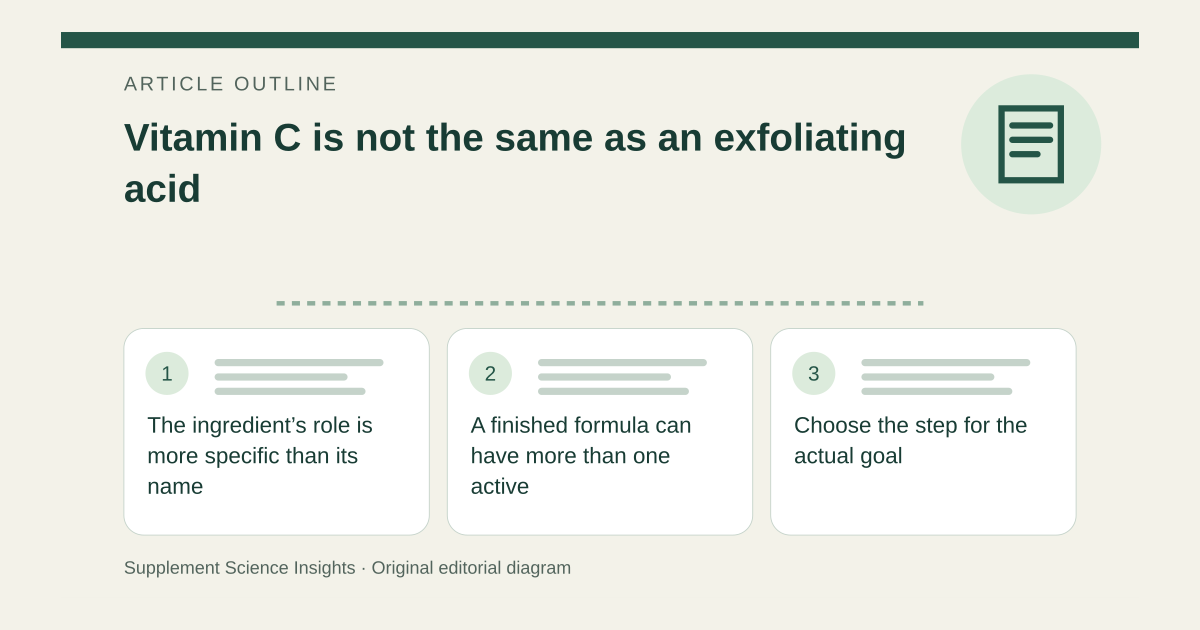
The ingredient’s role is more specific than its name
Vitamin C is studied for antioxidant activity, collagen-related biology and pigmentation effects. AAD describes salicylic acid as an acne treatment that opens clogged pores and exfoliates. Those are different uses; one ingredient should not be substituted solely because both names contain acid. [1][2]
A finished formula can have more than one active
A product sold as a vitamin C serum may also include exfoliating acids or other ingredients. If it causes peeling or stinging, that sensation does not prove vitamin C is performing a desirable exfoliation. Review the full formula and the other active products used that day. [3][4]
Choose the step for the actual goal
Imagine the goal is clogged-pore treatment. A vitamin C serum should not automatically replace the acne plan. Conversely, adding several acids to a tolerated vitamin C routine can increase irritation without establishing extra benefit. A dermatologist can help distinguish acne, texture and pigment concerns. [2][3]
| Question | Practical interpretation |
|---|---|
| Ascorbic acid | Vitamin C ingredient |
| Salicylic acid | An exfoliating acne ingredient |
| Peeling or burning | Not proof of useful exfoliation |
Sources for this article
- The Roles of Vitamin C in Skin Health - PMC
Source consulted: 2026-09-20. This is a reference resource, not a claim that we conducted the studies or tested a product. - Acne: Diagnosis and treatment
Source consulted: 2026-09-20. This is a reference resource, not a claim that we conducted the studies or tested a product. - Do facial masks work, and should I add one to my skin care routine?
Source consulted: 2026-09-20. This is a reference resource, not a claim that we conducted the studies or tested a product. - How to test skin care products
Source consulted: 2026-09-20. This is a reference resource, not a claim that we conducted the studies or tested a product.