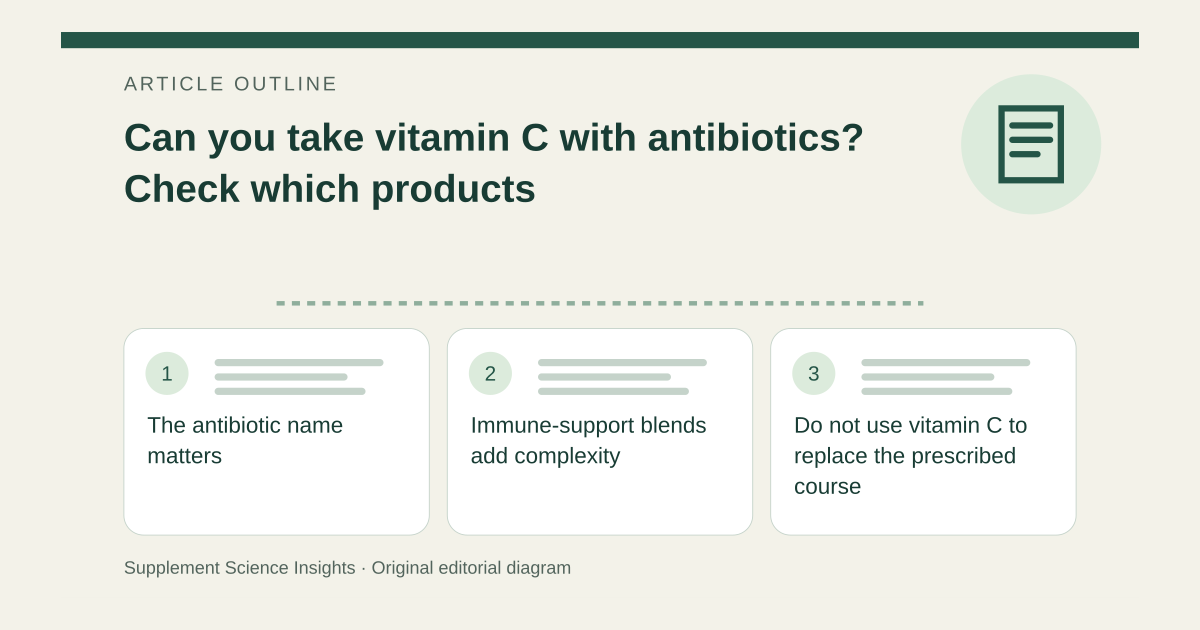
The antibiotic name matters
NHS doxycycline guidance identifies interactions with iron- or zinc-containing products and certain antacids. That is an example of a medicine-specific issue, not a rule that every antibiotic interacts with vitamin C itself. Other antibiotics have their own instructions. [1]
Immune-support blends add complexity
A product marketed around vitamin C may contain several minerals or other ingredients. NIH vitamin C guidance does not provide universal clearance for such combinations. Read all active ingredients and servings, including powders and repeated cold products. [2][1]
Do not use vitamin C to replace the prescribed course
Vitamin C supports normal physiology, but the inspected sources do not establish it as a replacement for antibiotic treatment. Follow the medicine directions and seek advice about side effects or worsening infection. Changing antibiotic timing or stopping it independently can undermine the intended care. [2][1]
Ask a precise interaction question
Imagine someone asks whether vitamin C is compatible but the label also contains zinc. Give the pharmacist the antibiotic name, dose and complete supplement label. Any separation advice should come from that review, not a blanket rule attached to vitamin C. [1]
| Detail | Reason |
|---|---|
| Exact antibiotic | Interaction rules differ |
| Complete supplement ingredients | Minerals may be relevant |
| Dose and frequency | Defines exposure |
| Prescribed timing | Avoid unsupported schedule changes |
Sources for this article
- Doxycycline: antibiotic for bacterial infections - NHS
Source consulted: 2026-09-21. This is a reference resource, not a claim that we conducted the studies or tested a product. - Vitamin C - Health Professional Fact Sheet
Source consulted: 2026-09-21. This is a reference resource, not a claim that we conducted the studies or tested a product.